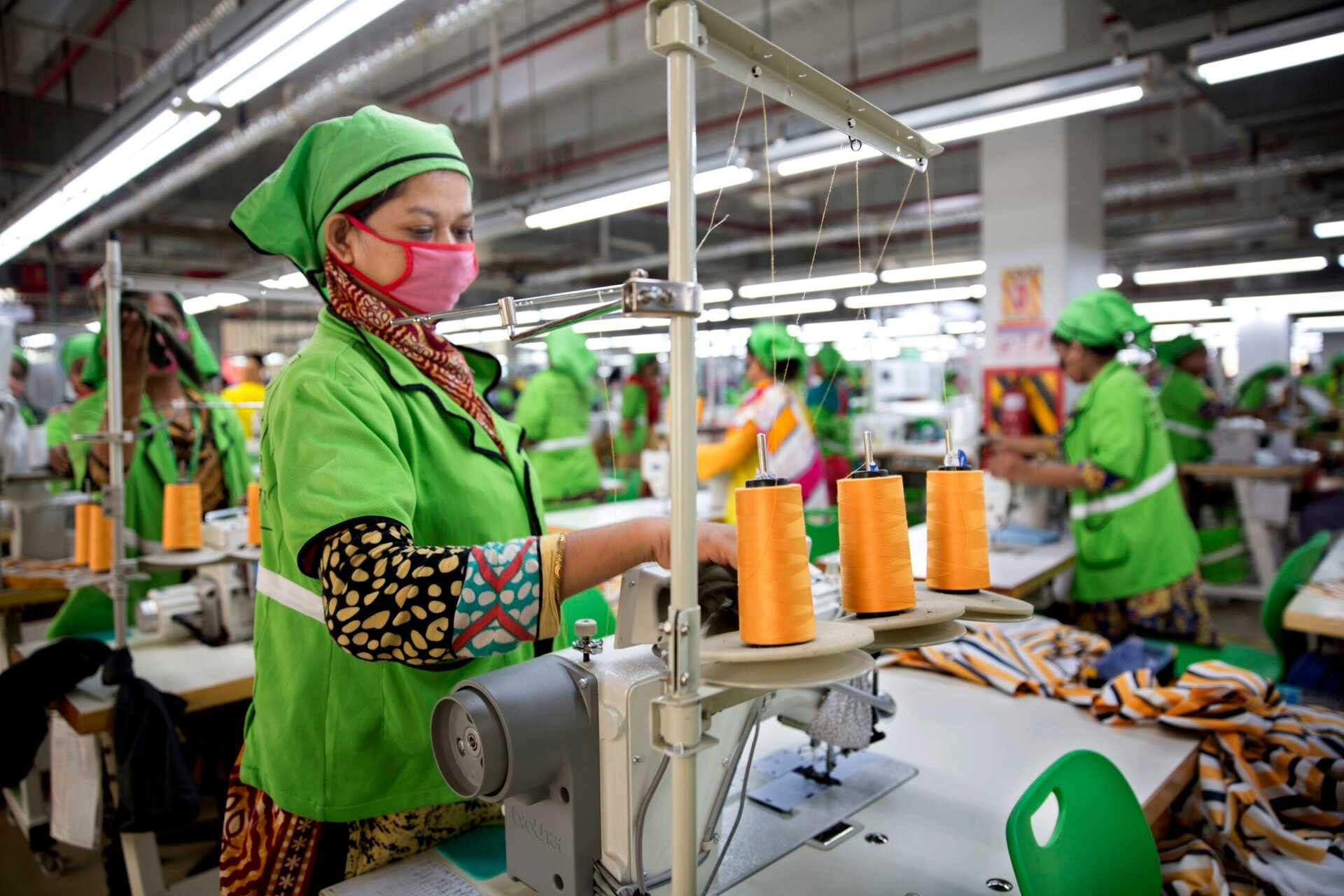
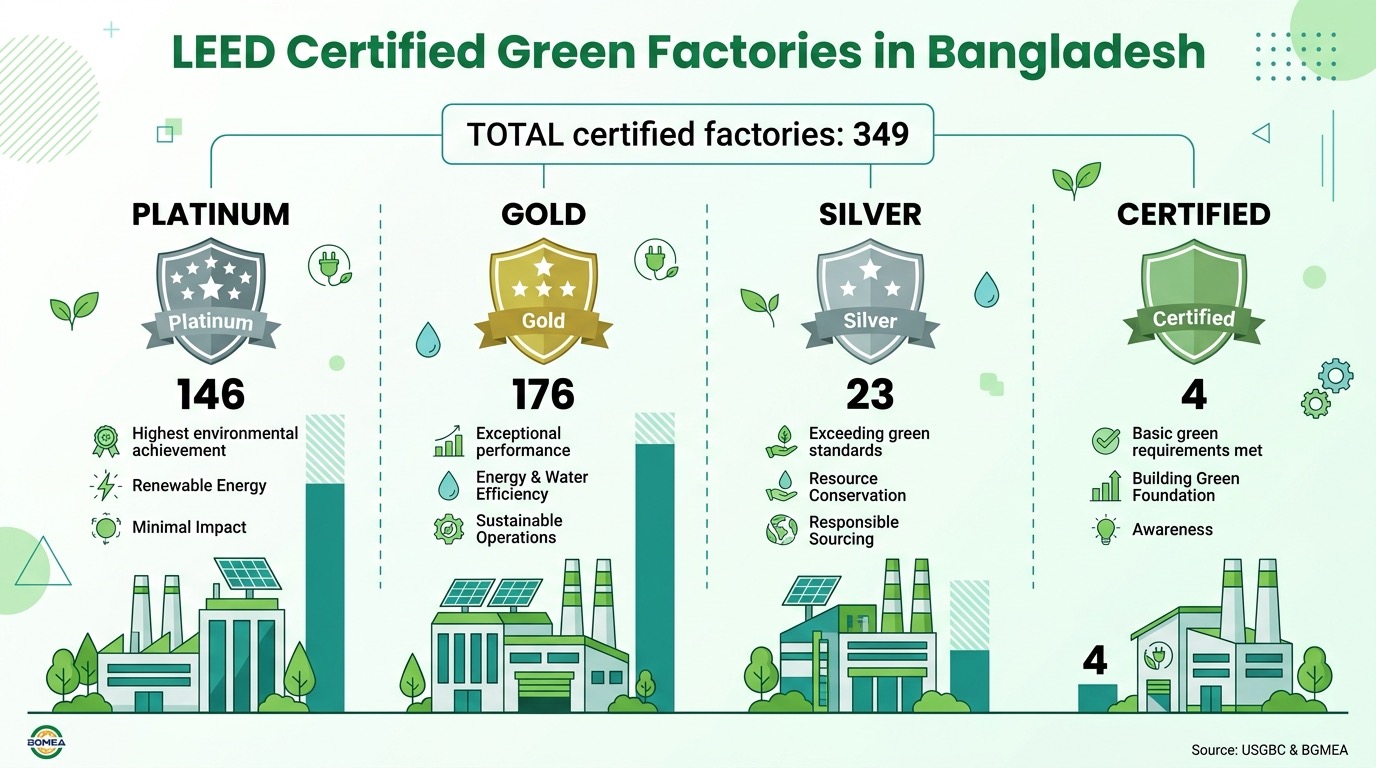
The Bangladeshi Textile and Garment (TNG) industry has rightfully earned global recognition for housing 349 LEED-certified factories—the highest concentration in the world. This achievement, driven significantly by the Sustainable Green Financing Scheme (now expanded to 1000 crore taka at 5% interest), has positioned Bangladesh as a leader in green manufacturing infrastructure. However, a critical point of reflection is necessary: a green landscape cannot be built and sustained solely on the number of green buildings. The soft loan mechanism has successfully enrolled companies into the green idea, but the transformative impact will only materialize when this exercise is grounded in lean production management, rigorous utility measurement and monitoring, and a cultural shift toward a "green way of being." This report examines how the industry can move beyond the plaque on the wall to embed sustainability into daily operations.
The Soft Loan: A Catalyst, Not a Solution
The Sustainable Green Financing Scheme, launched on August 30, 2023 with an initial allocation of 400 crore taka, was a strategic intervention to lower the capital barrier for LEED certification. Its expansion to 1000 crore taka effective June 8, 2026 at a concessional 5% interest rate has accelerated adoption.
The Enrollment Effect: The 5% interest rate—significantly below the commercial lending rate of 10–12% in Bangladesh—has acted as a powerful incentive. It has persuaded mid-tier factory owners, who previously viewed LEED as a luxury, to invest in green building design, efficient machinery, and renewable energy integration. This is a positive development, as it expands the green infrastructure base.
The Risk of "Certification-Only" Thinking: However, the soft loan addresses the capital expenditure (CapEx) of green transformation, not the operational expenditure (OpEx) or the behavioral change required to sustain it. A factory can achieve LEED Gold certification with state-of-the-art equipment, but if the management does not measure energy usage per production line, if workers leave machinery running idle, or if water leaks are ignored, the building will underperform against its design potential. The plaque becomes a symbol of intent, not evidence of impact.
The green landscape, therefore, must be built on a foundation deeper than concrete and steel. It must be built on management philosophy and human behavior.
Lean Production Management: The Missing Link
Lean production management, originating from the Toyota Production System, is centered on the elimination of waste (Muda). In the context of the Bangladeshi TNG industry, this philosophy aligns perfectly with environmental sustainability.
The Intersection of Lean and Green: In a conventional factory, waste is invisible. Machines run during lunch breaks, compressed air leaks hiss unnoticed, and fabric offcuts pile up. Lean management forces managers to see this waste. LEED certification requires efficient building systems, but lean management ensures those systems are used efficiently:
- Energy Waste: A LEED-certified factory with an efficient HVAC system still wastes energy if the system runs during non-production hours. Lean scheduling eliminates this.
- Water Waste: A LEED-certified factory with low-flow fixtures still wastes water if dyeing processes are not optimized for right-first-time output. Lean process control reduces re-dyeing, which is the biggest source of water waste in textile processing.
- Material Waste: Lean cutting-room management reduces fabric waste, which reduces the carbon footprint of raw material production (the largest component of a garment's environmental impact).
The Commercial Logic: Lean production is not an environmental initiative; it is a profitability initiative. Every kilowatt-hour saved, every liter of water conserved, and every kilogram of fabric salvaged directly reduces the cost per garment. In an industry with razor-thin margins, this operational discipline is the difference between profit and loss. The green impact is a byproduct of sound management.
Measurement and Monitoring: The Foundation of Credibility
The maxim "You cannot manage what you do not measure" is the core challenge facing the green factory movement in Bangladesh.

Moving Beyond Aggregate Data: Many factories can report their total monthly electricity bill. Very few can report kilowatt-hours per dozen garments produced on a specific line on a specific day. This granularity is where true green production begins.
Sub-metering: LEED encourages sub-metering, but enforcement of its use is weak. Factories must install meters on individual production lines, dyeing machines, compressors, and HVAC units.
Real-Time Dashboards: Data must be visible. When a line supervisor sees a live dashboard showing energy consumption spiking during idle periods, they are empowered to act. When workers see the impact of their actions, they become participants in the green journey, not passive observers.
The Role of Digitalization: The TNG industry is undergoing a digital transformation. Enterprise Resource Planning (ERP) systems, Industrial Internet of Things (IIoT) sensors, and cloud-based analytics are becoming accessible to Bangladeshi manufacturers. These tools enable the continuous monitoring of utilities—electricity, water, steam, and compressed air—at a granular level. This data is the raw material for both lean management and genuine sustainability reporting.
Credibility with Buyers: Global brands are increasingly skeptical of glossy sustainability reports. They want verifiable data. A factory that can provide auditable, real-time data on energy and water intensity per unit of production builds trust that a LEED plaque alone cannot provide. This data-driven transparency is the antidote to greenwashing.
Ultimately, the green landscape will not be sustained by buildings, loans, or dashboards. It will be sustained by people.
Enabling People to Have a "Green Way of Being"
The Cultural Shift: The "green way of being" is a mindset where sustainability is not an external compliance burden but an internalized value. This requires:
Training and Awareness: Workers at all levels—from sewing machine operators to boiler technicians—must understand why energy and water conservation matters. They must see the connection between their daily actions and the factory's competitiveness, which secures their jobs.
Incentive Structures: Green behavior should be rewarded. Factories can introduce team-based incentives for reducing energy consumption per unit. When workers see a direct financial benefit from turning off lights or reporting leaks, the behavior becomes habitual.
Leadership Commitment: The "green way of being" starts at the top. If senior management treats LEED as a marketing tool, workers will treat it as a joke. If management embodies lean principles and sustainability values, the culture will follow.
The Competitive Advantage of Culture: A factory with a deeply embedded green culture is difficult to replicate. Competitors can copy building designs, purchase the same machinery, and even access the same soft loans. But they cannot copy a workforce that is intrinsically motivated to eliminate waste. This cultural capital is the ultimate competitive moat.
The Current Landscape: A Snapshot
Bangladesh's leadership position is undeniable:
| LEED Certification Level | Number of Factories |
|---|---|
| Platinum | 146 |
| Gold | 176 |
| Silver | 23 |
| Certified | 4 |
| Total | 349 |
Source: USGBC & Bangladesh Garment Manufacturers and Exporters Association (BGMEA), 2026
However, these numbers only tell part of the story. It tells us how many factories have built green. It does not tell us how many factories are operating green. The next phase of Bangladesh's journey must focus on the latter.
Way Forward
The Sustainable Green Financing Scheme has been a resounding success in terms of enrollment. The expansion to 1000 crore taka at 5% interest has made green building economically rational for a broad swath of the industry. Bangladesh has secured its position as the global leader in green RMG infrastructure. But infrastructure is not impact. The true transformation will occur when the industry embraces the following:
- Integrate Lean and Green: Adopt lean production management as the operational backbone of certified factories. Waste elimination is both an economic and environmental imperative.
- Invest in Measurement: Mandate granular sub-metering and real-time monitoring of all utilities. Move from aggregate billing to unit-level intensity metrics (e.g., kWh/dozen garments).
- Invest in People: Develop training programs that cultivate a "green way of being." Link worker incentives to resource conservation outcomes.
- Demand Data, Not Just Plaques: Encourage buyers to request operational data (energy and water intensity) from suppliers, not just certificates. This will drive genuine performance improvement.
The green landscape of Bangladesh cannot be built on concrete alone. It must be built on the daily habits of millions of workers, the discipline of lean managers, and the transparency of data. The soft loan has opened the door; it is now up to the industry to walk through it and inhabit a genuinely sustainable future.