
The global climate finance landscape is undergoing a fundamental transformation. Traditional public climate finance remains significantly below the level required to meet global mitigation and adaptation targets. According to the UNFCCC, developing countries require trillions of dollars annually to achieve their Nationally Determined Contributions (NDCs). As a result, carbon markets are emerging as a critical mechanism for mobilizing private capital into climate solutions.
Meanwhile, as global brands accelerate net-zero commitments, a growing number of buyers are evaluating suppliers based on carbon intensity, renewable energy use, and supply-chain transparency. For Bangladesh, decarbonization is no longer simply an environmental objective. It is becoming a market access requirement and a competitive advantage.
Bridging Climate Ambition and Industrial Competitiveness
This convergence of climate ambition and trade competitiveness creates a unique opportunity for Bangladesh. As international demand for verified emission reductions and low-carbon products continues to grow, Bangladesh can position itself as both a supplier of climate-friendly goods and a destination for climate investment. Rather than viewing decarbonization as a cost burden, the country can leverage carbon finance to attract new investment, modernize industries, strengthen export competitiveness, and generate sustainable economic growth.
One concept gaining traction globally is the development of "Carbon Corridors"—structured pathways that connect climate finance providers, carbon market mechanisms, project developers, and emission reduction opportunities. For Bangladesh, a Carbon Corridor could serve as a strategic platform linking international climate capital with domestic decarbonization projects.
Bangladesh's Ready-Made Garment (RMG) sector is both an economic powerhouse and a significant emissions source. Recent industry assessments estimate that the RMG sector contributes approximately 15.4% of Bangladesh's greenhouse gas emissions, while the broader textile sector contributes an additional 12.4%, making the apparel value chain one of the country's largest industrial emitters. Therefore, decarbonizing this sector is a national economic priority.
Creating carbon corridors to access carbon finance has the potential to be one of the quickest solutions from both an economic and environmental perspective.
How Do Carbon Markets Work?
Carbon Markets Are Becoming an Investment Asset Class: For decades, environmental sustainability was viewed primarily as a compliance cost. Carbon markets are changing that perception.
Under Article 6, emission reductions generated in Bangladesh can be authorized, verified, and transferred internationally through ITMOs. This creates direct financial value for emission reductions and allows climate projects to generate recurring revenue streams. Examples include:
| Project Type | Carbon Revenue Potential |
|---|---|
| Solar PV installations | Medium |
| Industrial energy efficiency | High |
| Methane capture from biogas | High |
| Mangrove restoration | Very High |
| Waste-to-energy | High |
Countries that establish strong authorization, monitoring, and registry systems are expected to attract a disproportionate share of climate investment flows.
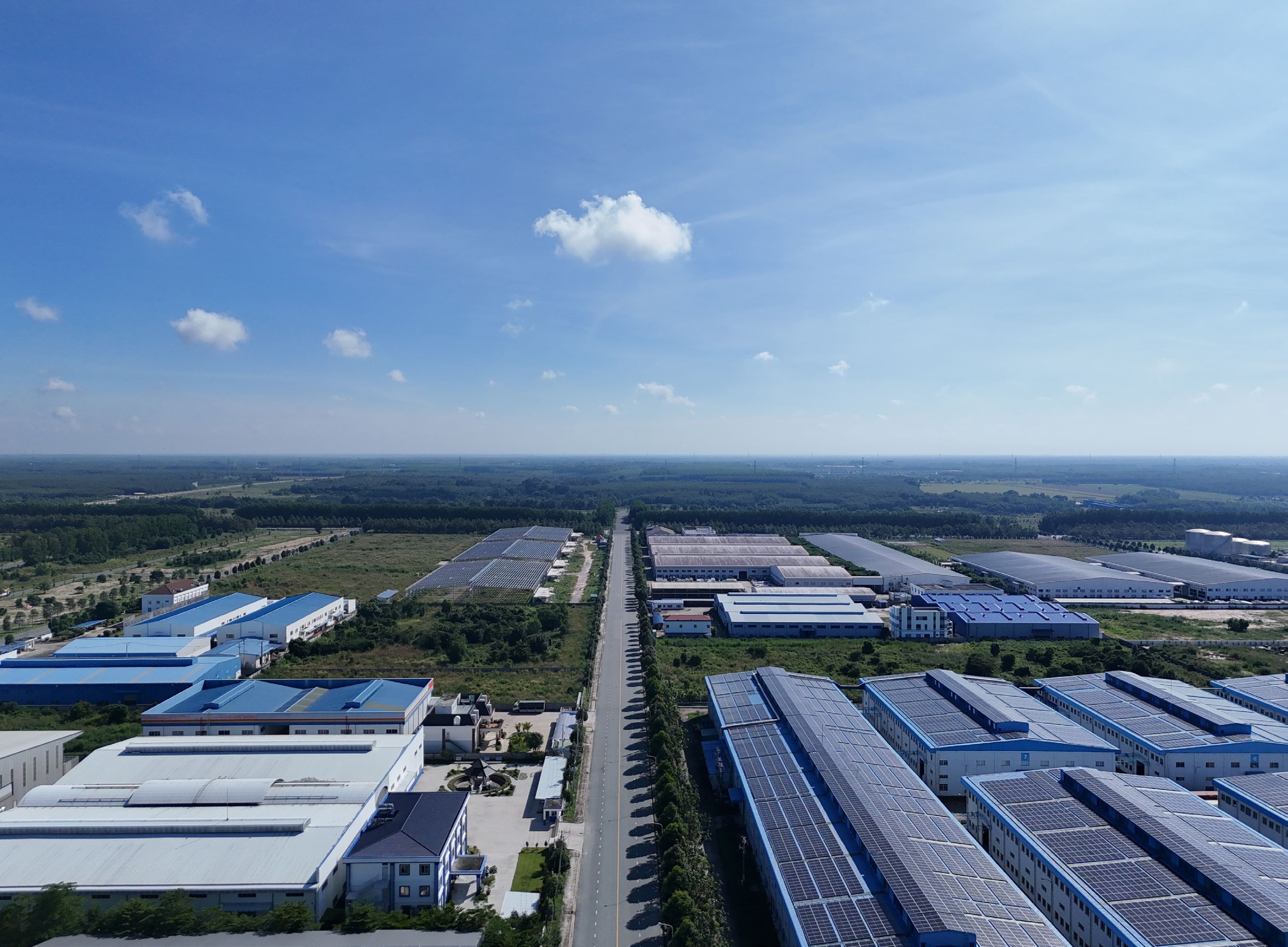
By monetizing verified emission reductions through carbon markets, factories can create an additional revenue stream that improves project bankability and shortens investment payback periods.
International Case Study: Vietnam's Low-Carbon Manufacturing Transition
Vietnam offers a valuable example of how export-oriented manufacturing economies can leverage sustainability as a competitive advantage.
Over the past decade, Vietnam has attracted substantial foreign investment into renewable energy, industrial energy efficiency, and export manufacturing modernization. Supported by international finance institutions and multinational buyers, manufacturers increasingly adopted:
- Renewable energy procurement
- Energy management systems
- Green industrial parks
- ESG disclosure and reporting
- Supply-chain decarbonization programs
These efforts strengthened Vietnam's attractiveness to global investors seeking resilient and low-carbon supply chains while supporting compliance with increasingly stringent buyer requirements. Similar approaches are now being promoted through World Bank and IFC-supported industrial greening initiatives across Asia.
What’s in it for Bangladesh? Can we replicate, adapt, or develop our own carbon market? Let’s examine all three scenarios:
1. Replicate: Don't Reinvent the Wheel
Bangladesh can replicate and scale Vietnam’s model by establishing a Carbon Corridor for the RMG sector. This would enable exporters to:
- Secure green investment without increasing debt burdens.
- Improve competitiveness in European and North American markets.
- Reduce exposure to future carbon-related trade measures.
- Generate potential carbon revenues through high-integrity emissions reductions.
- Strengthen Bangladesh's position in global sustainable supply chains.
2. Adapt: Create a Bangladesh Climate Finance Vehicle
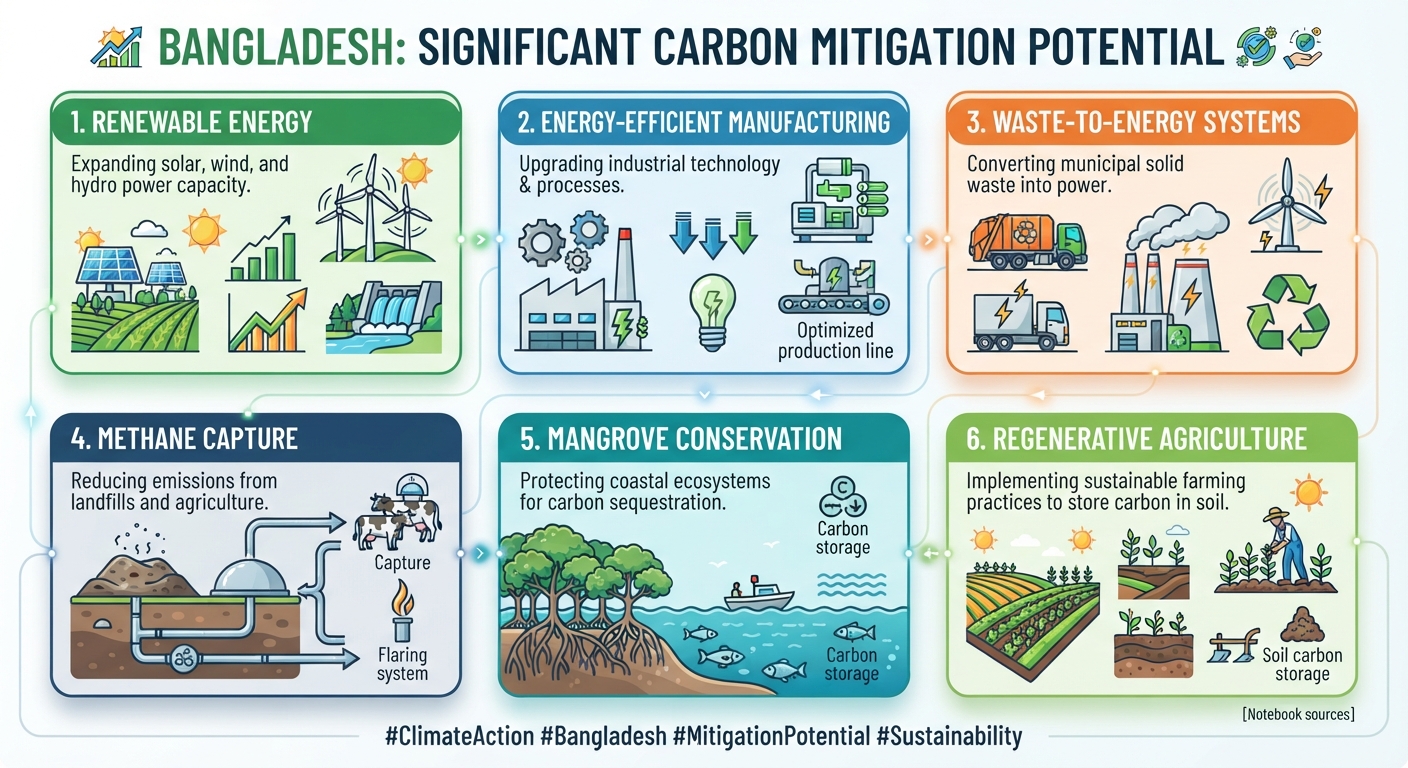
Despite its relatively small emissions footprint, Bangladesh has significant carbon mitigation potential across:
- Renewable energy
- Energy-efficient manufacturing
- Waste-to-energy systems
- Methane capture
- Mangrove conservation
- Regenerative agriculture

These sectors are increasingly attractive to global buyers seeking high-integrity carbon credits under Article 6 and voluntary carbon market frameworks.
3. Develop: Build a National Carbon Registry and Market Infrastructure
The timing is favorable and the momentum is already visible. Global carbon pricing revenues reached a record US$104 billion in 2023, with carbon pricing instruments now covering approximately 24% of global greenhouse gas emissions. By 2025, more than 80 carbon pricing instruments were operating worldwide, according to a report published by the World Bank in June 2025.
At the same time, Article 6 of the Paris Agreement is moving from policy design to implementation. As of 2025, 99 bilateral carbon cooperation agreements had been established among 61 countries, enabling the transfer of Internationally Transferred Mitigation Outcomes (ITMOs) across borders.
A growing number of countries—such as Japan, Singapore, Switzerland, and several EU member states—are actively establishing bilateral carbon cooperation arrangements under Article 6 to achieve climate targets cost-effectively. Bangladesh can position itself as a preferred destination by developing:
- Pipeline-ready carbon projects
- Transparent approval procedures
- National carbon accounting systems
- Investment-grade MRV frameworks
This can unlock substantial FDI into renewable energy, low-carbon infrastructure, and climate-smart agriculture.
Recommendations & Priority Actions
- Establish a National Carbon Registry
- Develop Article 6 authorization procedures
- Create corresponding adjustment protocols
- Strengthen digital MRV systems
- Align GHG accounting with ISO 14064, GHG Protocol, and Article 6 requirements
- Build a national pipeline of bankable carbon projects
- Train local validators, verifiers, and carbon market professionals
Countries that move first are likely to secure strategic advantages as global demand for high-integrity credits continues to grow.