
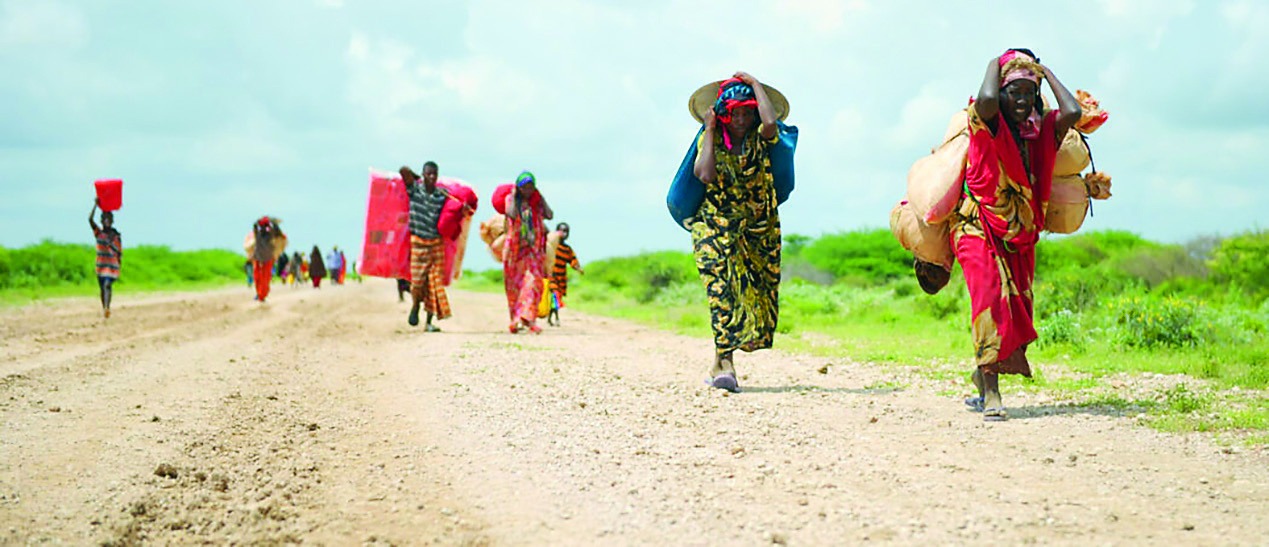
Climate change is no longer merely an environmental issue. In practical terms, it has become a major occupational hazard for millions of workers in West Africa. In Côte d’Ivoire, rising temperatures, recurring heat waves, and more frequent and intense extreme weather events are taking a heavy toll on health, safety, and productivity. The central idea of this article is simple: when properly integrated, occupational risk prevention can become a key driver of climate adaptation and a pathway to more decent work.
The climate is changing, and so are working conditions
Global warming jeopardizes many of the Sustainable Development Goals, including those related to employment, health, and poverty reduction. In sub-Saharan Africa, the least developed countries are among the most vulnerable and least equipped to cope with climate shocks, even as their economies rely heavily on sectors that are highly sensitive to climate change: agriculture, construction, transportation, and extractive industries.
In Côte d’Ivoire, the effects are already visible, and the projections are alarming: rising average temperatures, more frequent episodes of extreme heat, and disrupted rainfall patterns, with an increased risk of localized flooding and droughts. Added to this is growing pressure on water resources and ecosystems on which many economic activities depend. For workers, this translates into more arduous workdays, new or heightened health risks, and greater exposure to accidents and occupational diseases.
Heat, Health, and Safety: A Blind Spot in Sustainability
Heat is undoubtedly the most direct impact of climate change on the world of work. The International Labor Organization (ILO) points out that climate adaptation and efforts to reduce emissions have profound repercussions on employment, income, and poverty. Depending on the situation, they can either threaten decent work or, conversely, open up new opportunities.
In many sectors in Côte d’Ivoire, exposure to heat is already a daily reality. In agriculture and agribusiness (cocoa, coffee, pineapple, etc.), work takes place in open fields, often without access to shade or drinking water. In construction and infrastructure, work sites are open-air. In transportation and logistics, drivers and warehouse workers operate in spaces that are often poorly ventilated. Finally, in manufacturing and workshops, the heat generated by machinery compounds the problem of inadequate ventilation.
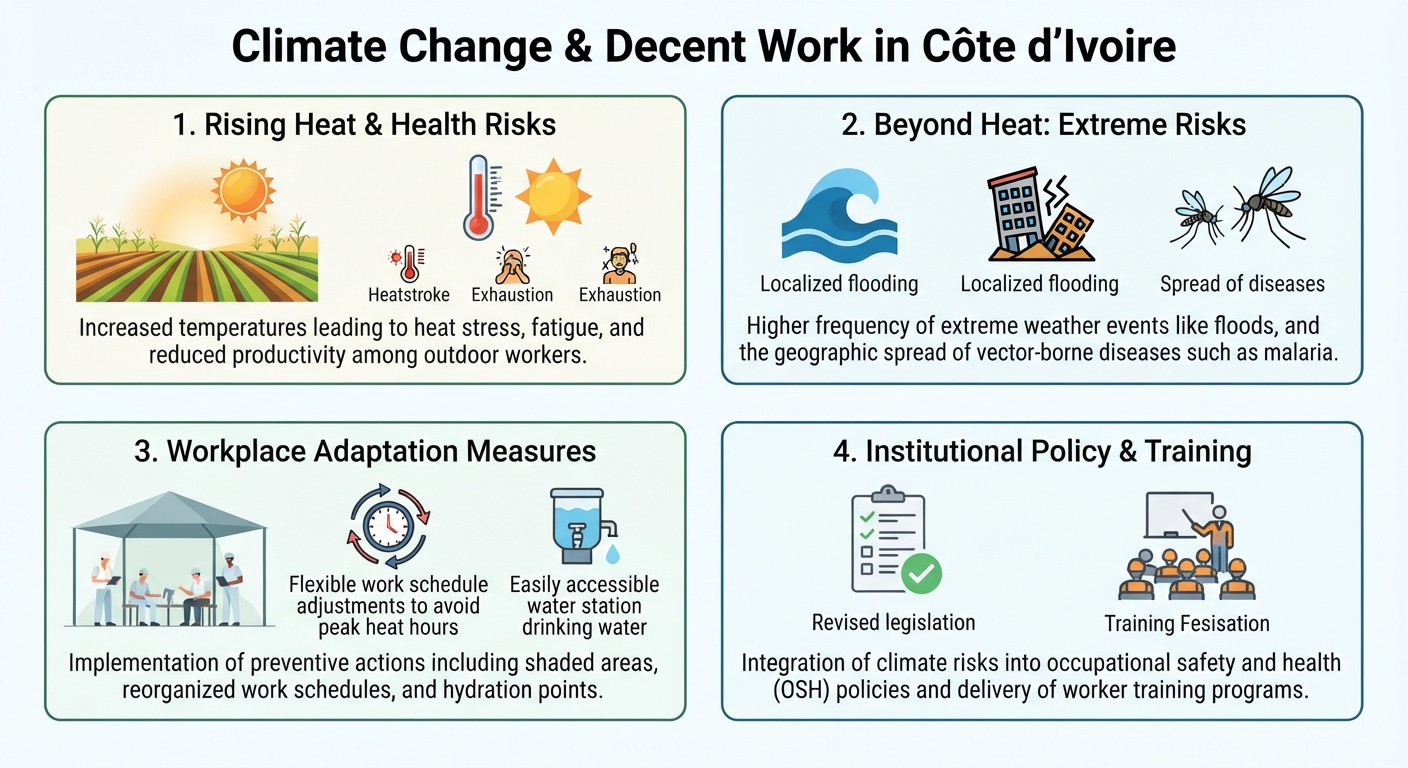
The health consequences are well known: heatstroke, exhaustion, dehydration, worsening of cardiovascular and kidney diseases, decreased alertness, and an increase in accidents. In the long term, repeated exposure can also contribute to chronic conditions. The ILO emphasizes that these changes pose a serious threat to decent work, especially in the most vulnerable and least developed countries.
But heat is not the only danger. Climate change also amplifies other occupational risks: floods and extreme weather events, with their associated risks of drowning, electrocution, building collapses, or water contamination; the geographic and seasonal spread of mosquito-borne diseases, such as malaria and dengue fever; and, more subtly, psychosocial risks linked to climate insecurity, loss of income, and internal migration. West African authorities have, in fact, recently called for strengthening the prevention of psychosocial risks in the workplace. Yet these dimensions remain largely absent from health and safety policies, even though they are essential to truly sustainable development.
Integrating Climate Considerations into Occupational Risk Prevention
If managed properly, the transition to sustainable economies can create new jobs and secure existing ones. However, decent work must be placed at the heart of these strategies. For Côte d’Ivoire and the subregion, this means making occupational health and safety a pillar of climate adaptation.
Several concrete measures can be implemented on a broad scale, particularly in the most vulnerable sectors. First, reorganize work schedules: avoid the hottest hours of the day and increase the number of breaks in shaded or air-conditioned areas. Next, adapt workstations and sites: install shelters, canopies, ventilation systems, and easily accessible drinking water stations, and provide appropriate protective equipment, such as lightweight clothing and head coverings. Finally, implement monitoring and early warning systems: simple heat indicators and alert thresholds that automatically trigger measures—such as slowing down work rates or temporarily halting the most exposed activities. These measures are as much about occupational risk prevention as they are about climate adaptation: they protect workers while maintaining productivity in a warming world.
The ILO and the United Nations Framework Convention on Climate Change have also reached an agreement to promote decent work and a “just transition” toward sustainable economies, with an emphasis on institutional capacity-building and training. In Côte d’Ivoire, this could take the form of systematically integrating climate risks into occupational health and safety training, raising awareness among workers and supervisors about the signs of heatstroke, dehydration, and heat exhaustion, and training health and safety committees to develop local adaptation plans: procedures for heat waves, floods, etc. An effective approach also requires involving workers in identifying risks and solutions, in order to build a genuine culture of shared prevention.
At the national and sectoral levels, several levers exist. Legislation and standards can be revised to explicitly incorporate climate risks—heat, floods, extreme events—into regulations and prevention guidelines, while aligning these provisions with international commitments (SDG 13, ILO conventions, the Paris Agreement). Incentives can also be created for businesses: linking access to certain public procurement contracts, financing, or certifications to the implementation of climate adaptation plans that include worker protection, and encouraging export sectors such as cocoa and coffee to incorporate these criteria into their specifications and audits.
Finally, simple indicators of “climate resilience in the workplace” are needed: rates of heat-related incidents, lost workdays, and coverage of adaptation measures by sector. These tools enable a shift from a reactive approach—managing crises—to a proactive one—anticipating and reducing risks—in line with international best practices regarding corporate climate resilience.
Case Studies and Action Steps for Côte d’Ivoire
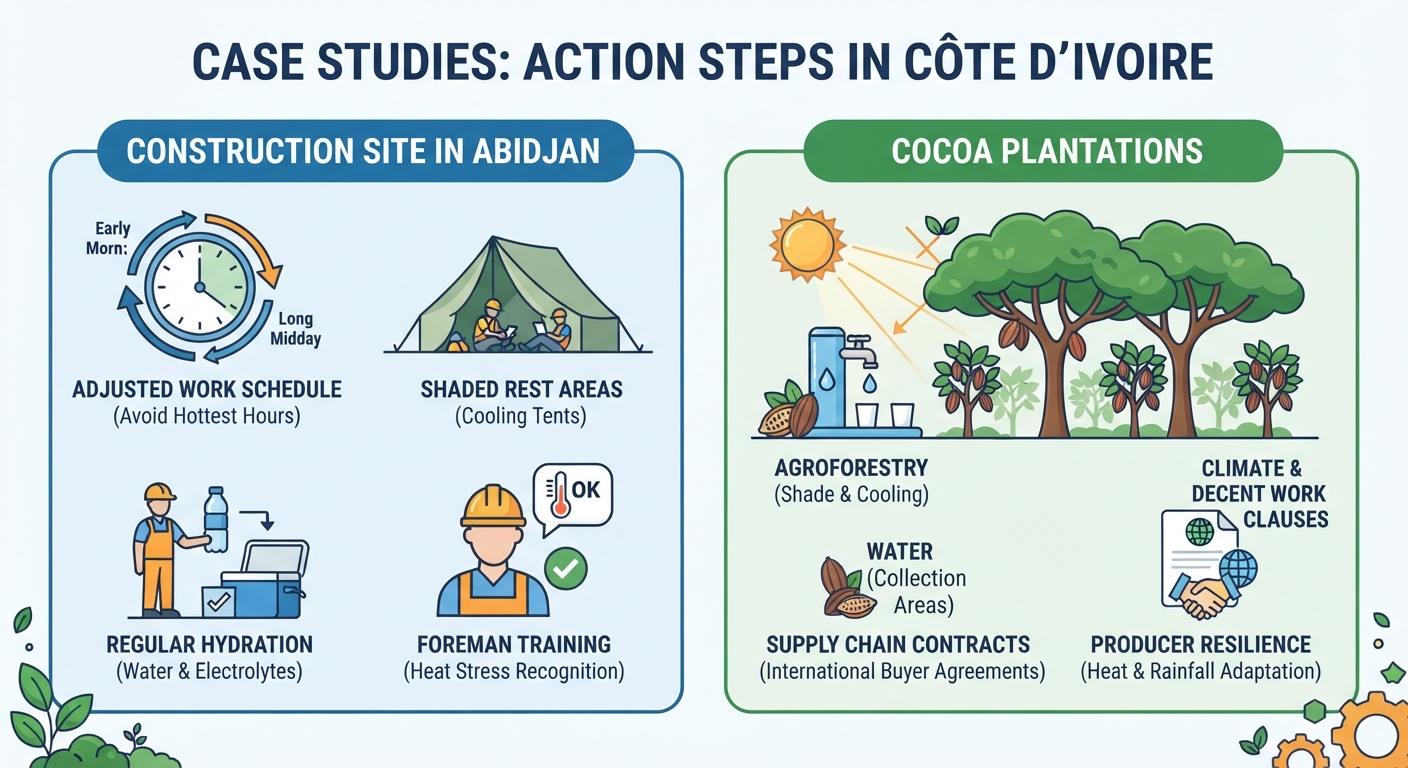
Let’s take the example of a construction site in Abidjan. Crews were working in direct sunlight under grueling conditions. By adjusting work schedules—starting very early in the morning and taking a long break in the middle of the day—setting up shaded tents, regularly distributing water and electrolytes, and training foremen to recognize the signs of heatstroke, the results were immediate: fewer work stoppages due to illness, more consistent work rates, and a better working atmosphere on the site.
In cocoa plantations, agroforestry plays a key role: it provides shade and lowers temperatures in the plots. The installation of water stations and shelters in collection areas, as well as the inclusion of “climate and decent work” clauses in contracts with international buyers, strengthens producers’ resilience to heat and changing rainfall patterns. These examples show that simple measures, rooted in occupational risk prevention, directly contribute to climate adaptation and social sustainability.
Conclusion: Making Decent Work a Pillar of Climate Action
Climate change is one of the greatest challenges of our time. Without integrated action, it risks preventing many countries from achieving sustainable development. For Côte d’Ivoire and West Africa, turning a blind eye to the impact of climate change on working conditions would undermine the very foundations of development: workers’ health, productivity, and dignity.
Integrating worker protection into climate adaptation strategies is not merely a technical choice. It is a societal choice that will determine whether the ecological transition will be fair and inclusive. By placing decent work at the heart of climate action, Côte d’Ivoire can transform a global threat into an opportunity to strengthen its economic, social, and environmental resilience.