In a world of finite resources and escalating environmental pressures, the linear economic model of 'take-make-waste' is no longer viable. For Bangladesh's industrial sectors, the transition toward a circular economy is rapidly evolving from a sustainability ideal into an imperative for global export competitiveness.
Industrial Symbiosis and Material Recovery
Industrial symbiosis—where the byproducts or waste of one manufacturing process become the raw material inputs for another—offers transformative potential for Bangladesh's dense manufacturing clusters. In the ready-made garment and textile sectors, hundreds of thousands of tonnes of post-industrial cotton cutting waste (jhut) are now being sorted, mechanically recycled, and spun back into high-grade yarns.
Simultaneously, closed-loop water recycling, effluent chemical recovery, and bio-based packaging alternatives are cutting production costs and reducing environmental footprints across industrial export processing zones.
Extended Producer Responsibility and Traceability
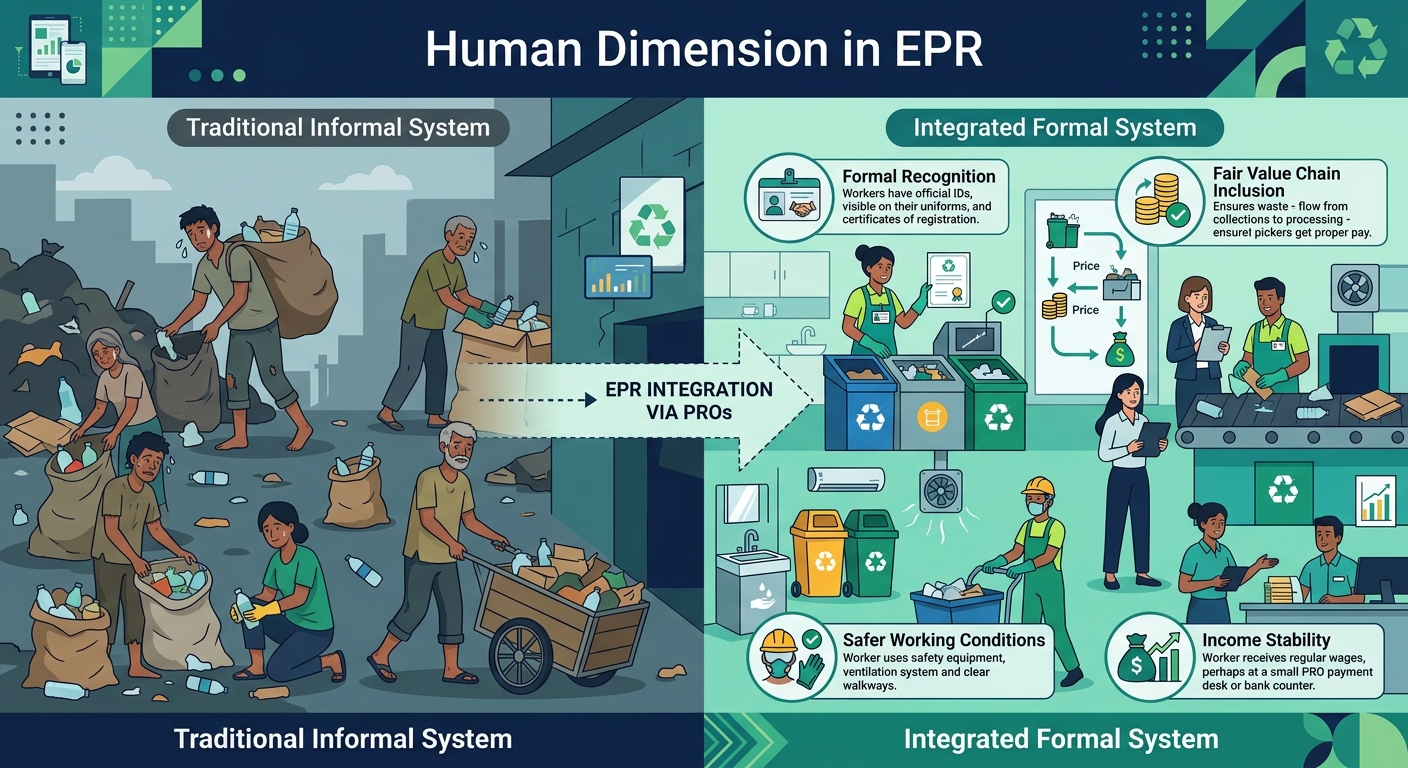
As international regulations like the European Union's Ecodesign for Sustainable Products Regulation (ESPR) take effect, supply chain transparency and verifiable circularity will determine global market access. Establishing national digital material passports, formalizing informal waste collection networks, and incentivizing eco-design are the essential pillars of this transition.
By closing material loops and cultivating circular supply chains, Bangladesh can decouple economic growth from resource consumption, safeguarding natural ecosystems while cementing its position as a global leader in sustainable manufacturing.