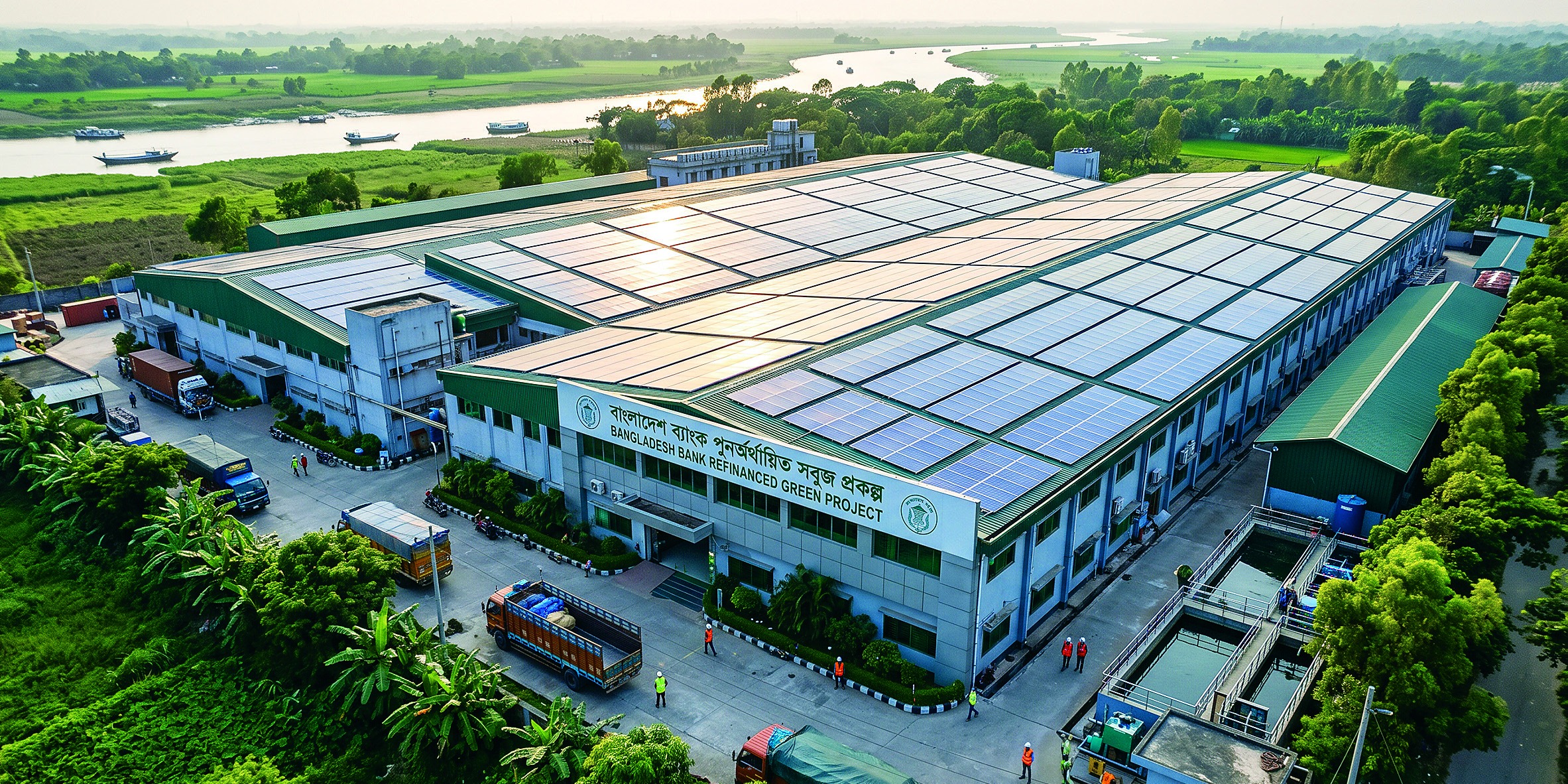
Bangladesh is exceptionally climate-vulnerable, suffering major physical and economic risks from cyclones, floods, salinity, and heat despite contributing a negligible 0.42 percent of global greenhouse gas emissions, according to the Emissions Database for Global Atmospheric Research, of the European Commission. And yet, climate-related physical risk from cyclones, floods and river erosion to salinity intrusion, heat stress and changing rainfall patterns pose significant risks to its economic growth. The National Adaptation Plan (2023–2050) estimates annual climate-induced losses of 1.3 percent of GDP, which could rise to 2 percent under extreme scenarios.
Despite this minimal share, less than 0.5 percent of global greenhouse gas emissions, pursuing decarbonization offers a strong economic opportunity rather than a growth sacrifice. By tapping into the global transition toward a low-carbon economy, Bangladesh can attract vital international concessional finance, grants, guarantees, and private capital to de-risk climate investments and support national development.
Decarbonization, therefore, is a strategic tool to attract climate finance, green investment, and resource efficiency while safeguarding Bangladesh's export competitiveness. Balancing economic growth with climate goals is essential, and Bangladesh has formalized this through NDC 3.0, aiming for a 20.31% reduction in greenhouse gas emissions from business-as-usual levels by 2035.
This goal consists of an unconditional 6.39% target funded domestically and a 13.92% conditional target requiring international climate finance, technology transfer, and capacity building—totaling an absolute reduction of 84.97 Mt CO₂e.
To address climate impacts, countries require early warning systems, resilient agriculture, water security, shock-responsive social protection, and climate-proof infrastructure. Nature-based solutions—such as restoring mangroves and wetlands—must move from pilots to mainstream policy. Because public budgets cannot close the large adaptation finance gap alone, governments must integrate natural capital accounting and climate-risk screening into planning. Highlighting that environmentally harmful public subsidies reached $2.4 trillion in 2023, the UNEP report urges reforming these subsidies and aligning budgets with the Rio Conventions. Finally, key ministries must share unified risk maps to manage cross-border environmental threats effectively.
This is where the evolving role of Bangladesh Bank (BB) becomes particularly relevant and, therefore, Bangladesh Bank is playing a catalytic role in mobilizing private capital by creating an enabling regulatory and financial environment for green, sustainable and climate-resilient investment.
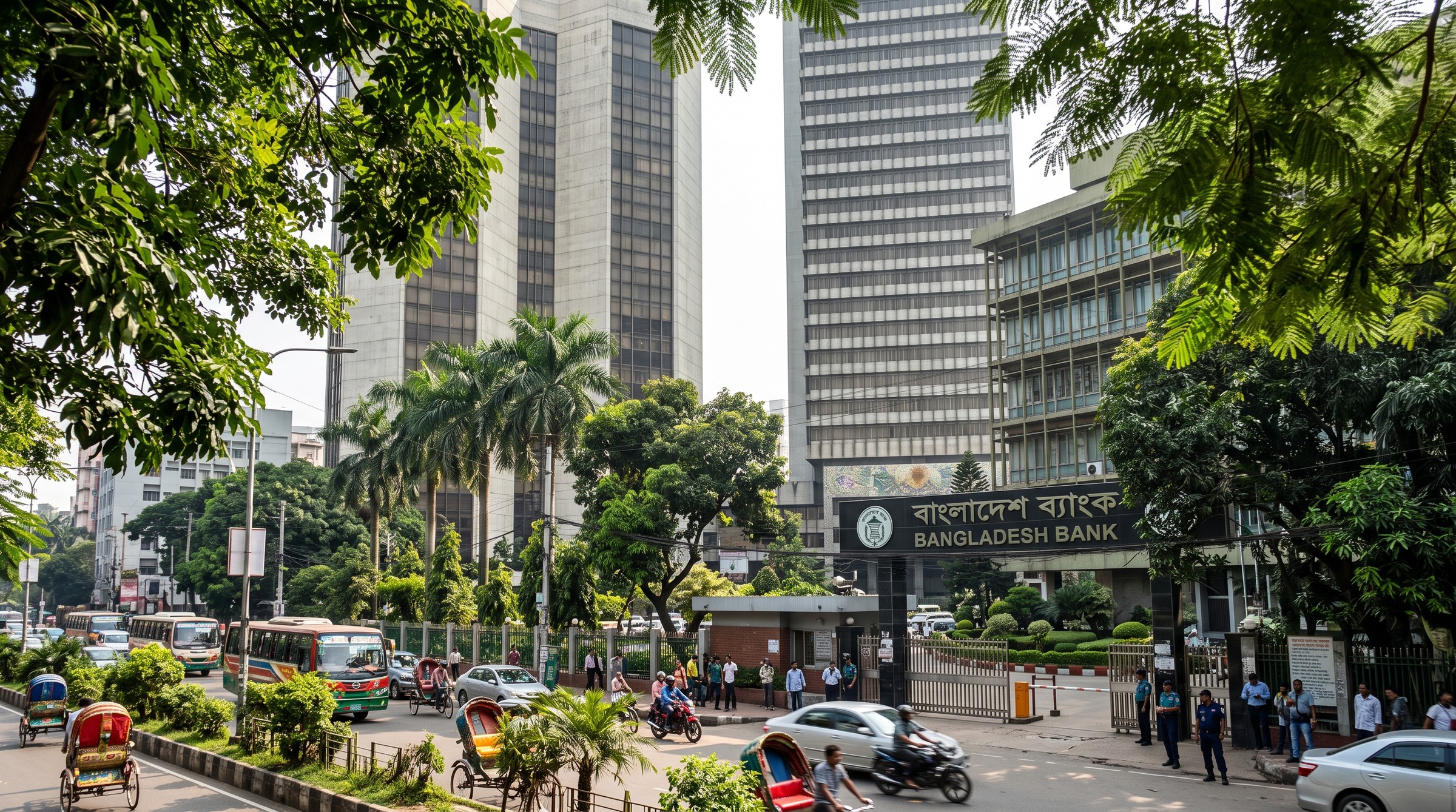
BB’s Policy Initiatives Supporting Decarbonisation
To accelerate decarbonisation financing through green, sustainable, and climate finance, Bangladesh Bank supports the financial system via policy initiatives, subsidized low-cost refinancing schemes, innovative financial products, and capacity building through training and seminars.
From a policy perspective, Bangladesh Bank’s green finance journey began in 2011 with the introduction of ‘Policy Guidelines on Green Banking’, making it a pioneer in embedding environmental considerations into banking regulation. Over time, the strategy expanded significantly with the 2015 Climate Risk Fund, green finance targets, and 2017 Environmental and Social Risk Management (ESRM) Guidelines. To ensure systematic ESG due diligence, the ESRM framework was further upgraded in 2022 with sector-specific environmental and social due diligence checklists.
The next major step occurred in 2020 with the introduction of the Sustainable Finance Policy, marking a shift from narrow "green banking" to comprehensive sustainable finance. Bangladesh Bank established a white-list taxonomy defining eligible green products and projects. This framework was revised in 2023 to incorporate gender considerations and a climate finance taxonomy, expanding the scope to 94 activities across 14 sectors. This taxonomy-based approach ensures a shared understanding among regulators, institutions, and investors regarding what qualifies as sustainable.
Furthermore, the 2022 Green Bond Financing Policy established a regulatory foundation for banks and financial institutions to engage in green bonds, complemented by ongoing expansion of refinancing facilities for eco-friendly projects.
Moreover, Bangladesh Bank is expanding its focus beyond green financing to build a climate-resilient financial system. A key milestone was the December 2023 Guideline on Sustainability and Climate-related Financial Disclosure, which incorporates international standards like IFRS S1 and S2 to mandate climate-related disclosures by banks and financial institutions. Recognizing that financial portfolios drive broader environmental impacts through financed emissions and sectoral transitions, the central bank also issued Climate Risk Management Guidelines in 2025 to help institutions systematically identify, assess, and disclose financial risks affecting credit quality, liquidity, and overall stability.
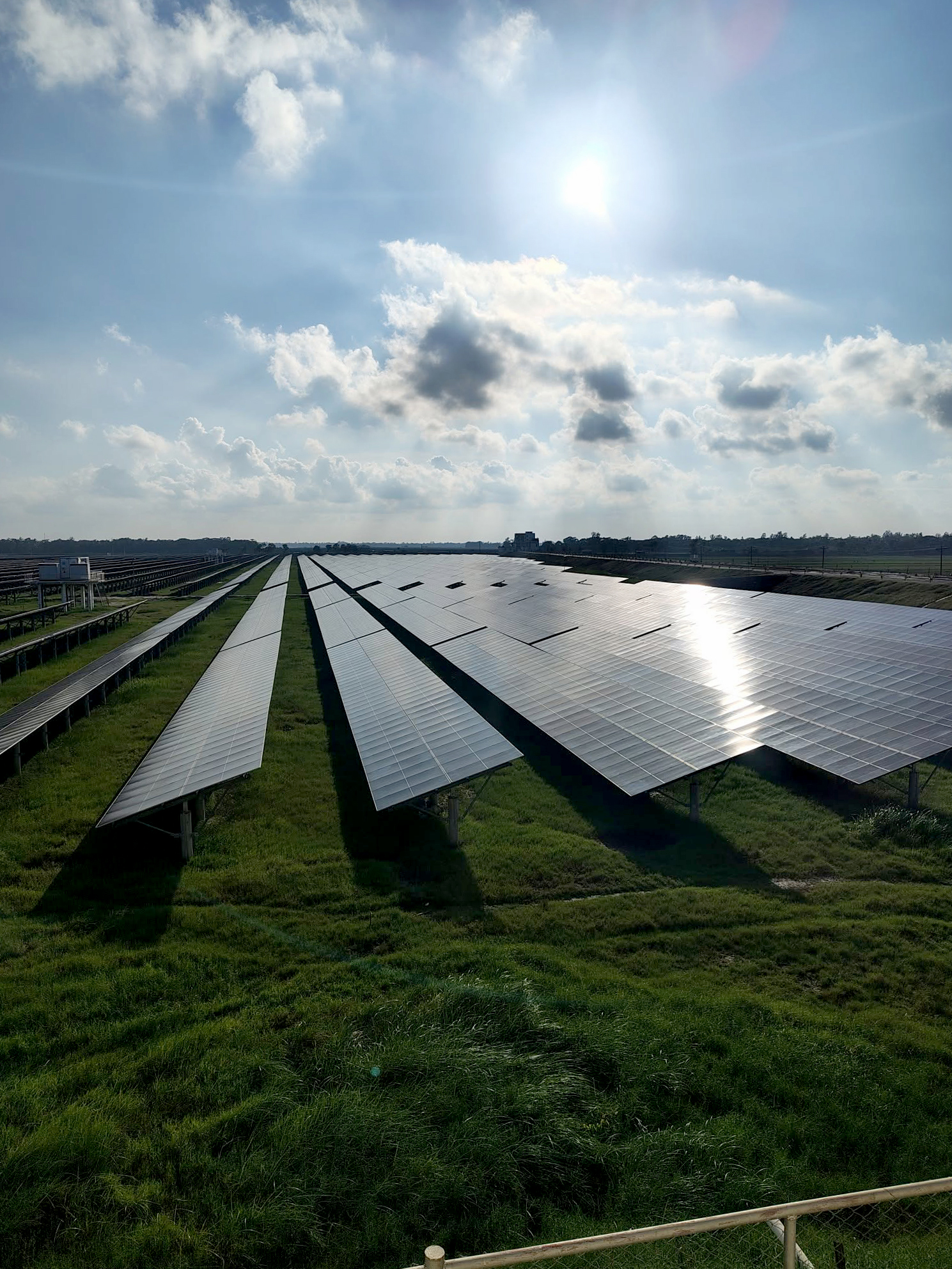
Financing Decarbonisation through Low-Cost Refinancing
Bangladesh Bank introduced targeted refinancing schemes to lower initial capital costs for eco-friendly machinery, driving the low-carbon transition. Initiated in 2009 for biogas, solar, and effluent treatment plants, these efforts expanded significantly when the Sustainable Finance Department issued its first master circular in 2016. Currently, the main green refinance scheme supports 70 products with a fund size of BDT 1,000 crore. Furthermore, BB facilitates seven sector-specific schemes—such as the Green Transformation Fund, Technology Development/Up-gradation Fund, and Green Factory Building initiatives—totaling BDT 12,000 crore to accelerate cleaner industrial production and help fulfill national NDC targets.
Targets and Progress Supporting Decarbonisation
Bangladesh Bank's mandatory targets require banks and NBFIs to disburse at least 5% of their previous year’s net loans to Green Finance (GF) and 40% to Sustainable Finance (SF). Within these allocations, specific sub-targets mandate that at least 20% of GF go to women entrepreneurs, 25% to CMSMEs (with 15% of that explicitly for women). These requirements systematically transform sustainable lending from voluntary practices into core institutional commitments, driving significant growth in outstanding portfolios.
Bangladesh Bank's green and sustainable finance outstanding experienced significant growth from 2021 to 2024 before contracting slightly in 2025. Specifically, green finance (GF) rose from 2.42% in 2021 to 4.57% in 2024, then dipped to 4.17% in 2025, while sustainable finance (SF) grew from 8.75% to 32.43% before settling at 30%. This trajectory underlines the central bank's expanding effectiveness in directing capital toward sustainability, while also emphasizing the ongoing need for rigorous regulatory enforcement to meet climate targets.
Conclusion
Bangladesh Bank's trajectory since 2011 reflects an evolving response to climate challenges, progressing from Green Banking to Sustainable Finance and robust Climate Risk Management. Despite negligible global emissions, Bangladesh faces severe climate vulnerabilities requiring both mitigation and adaptation finance. Because adaptation projects are less bankable, the central bank prioritizes mitigation, as low-carbon transitions simultaneously enhance resource efficiency, export competitiveness, and economic resilience.
These foundational efforts, however, cannot rely solely on public resources and bank lending. The ambitious financing demands of NDC 3.0, the National Adaptation Plan, and the Delta Plan 2100 necessitate mobilizing private capital via Green, Social, and Sustainability (GSSS) bonds, blended finance, and international funds. Bangladesh Bank continues to act as a catalyst by fostering a resilient regulatory framework to support this low-carbon economic transition.