For more than five decades, Bangladesh and Denmark have maintained a relationship that has expanded from traditional aid into a strategic partnership covering trade, investment, climate action, agriculture, labour rights, and green growth. Faced with escalating climate threats, rapid urbanization, and industrial pressures, Bangladesh is reshaping its growth trajectory, with Denmark serving as a key partner in sustainable development. Denmark's engagement operates through targeted initiatives across core economic sectors:
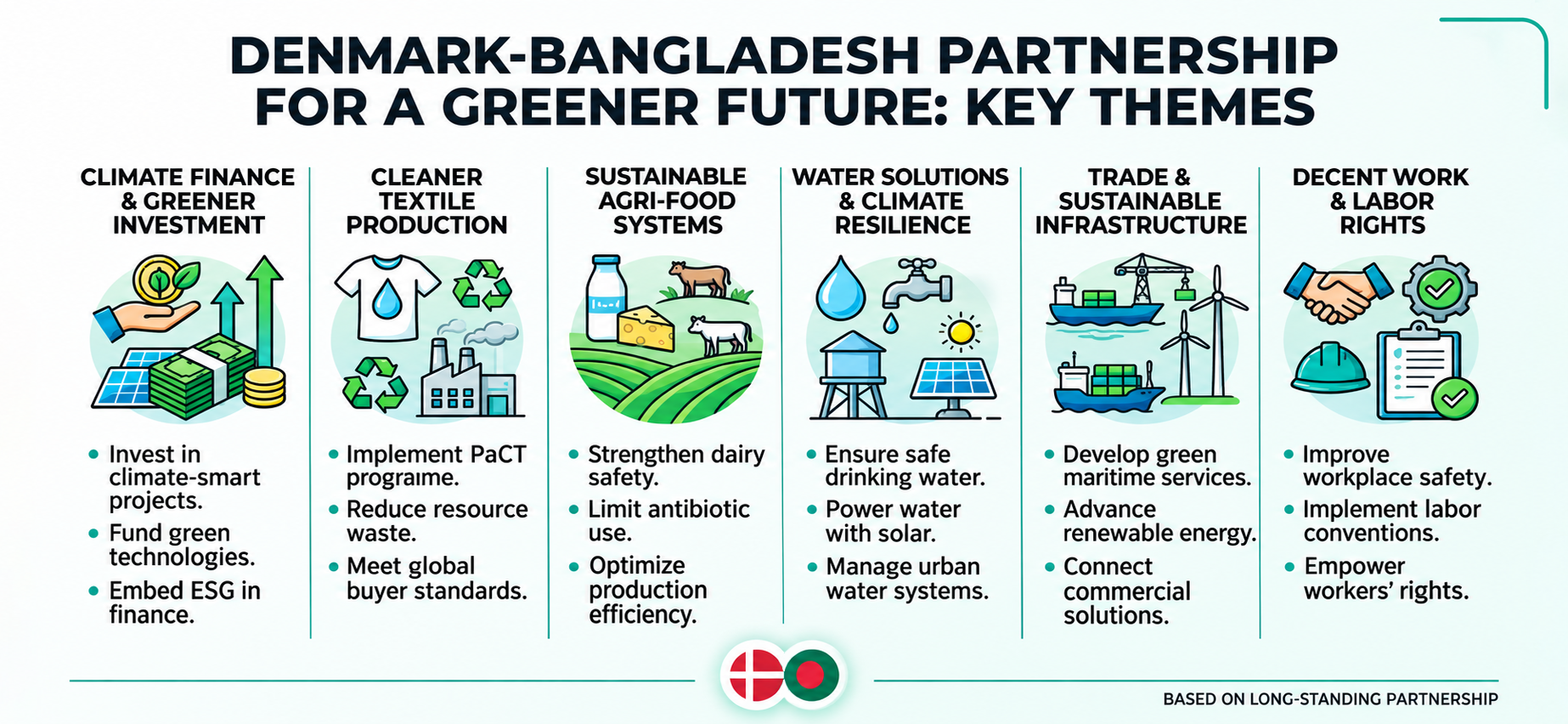
Climate Finance & Greener Investment: Through the Bangladesh Climate Advisory Partnership (B-CAP) with the IFC, Denmark accelerates ESG integration across financial institutions to mobilize private capital into renewable energy, shipping, and textiles.
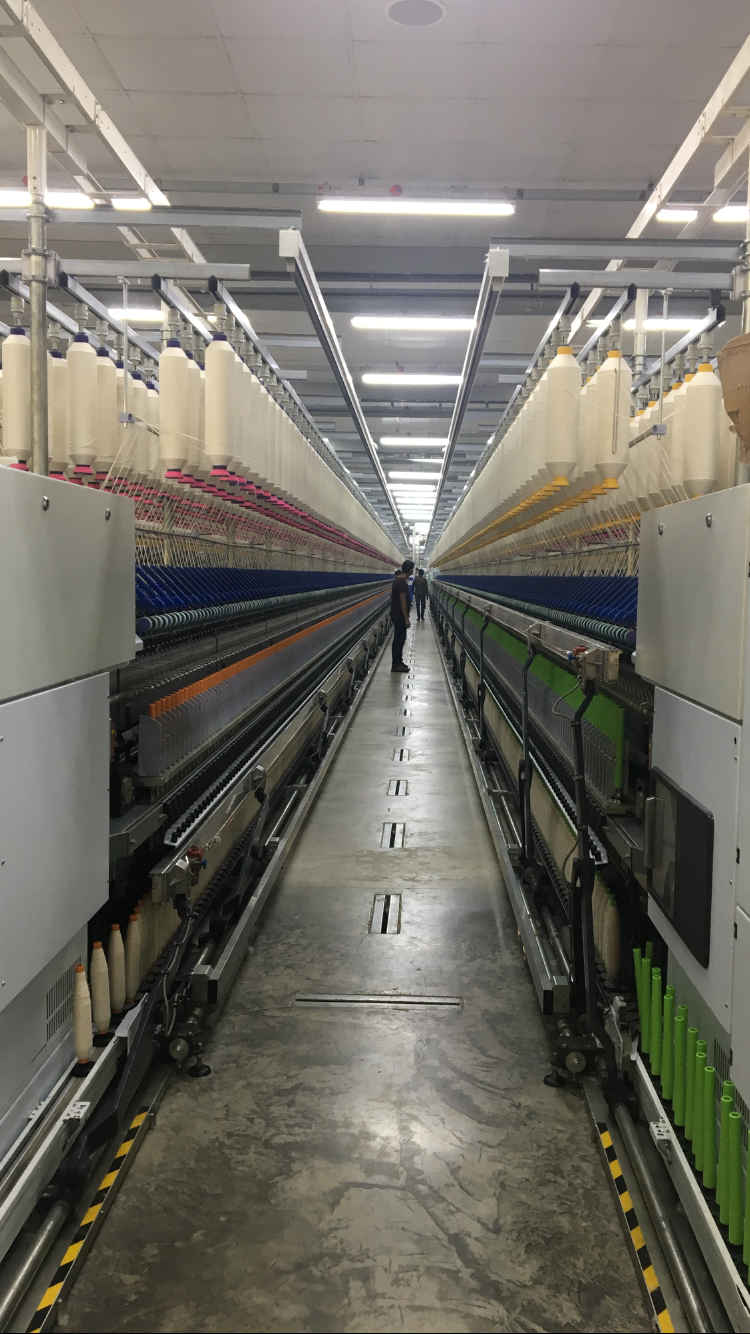
Cleaner Textile Production: Working with the IFC and BGMEA, the Partnership for Cleaner Textile (PaCT) equips ready-made garment factories to optimize energy, water, and chemical usage, cutting costs while improving global market competitiveness.
Sustainable Agri-Food Systems: The Strategic Sector Cooperation (SSC) Project focuses on food safety in the dairy value chain, prudent antibiotic use to combat antimicrobial resistance, and enhanced dairy production efficiency.
Climate-Resilient Infrastructure & Water: Danish support powers both centralized urban water systems and decentralized, solar-powered plants for vulnerable communities, addressing safe water access alongside clean energy adoption.
Decent Work & Social Sustainability: Supporting the Team Europe Initiative alongside the ILO and DIFE, Denmark helped Bangladesh become the first Asian nation to ratify all fundamental ILO labor conventions.
Climate Finance and Greener Investment
Under B-CAP, Denmark and the IFC collaborate to unlock commercial investment for climate-smart projects. Greater access to green finance allows local enterprises to adopt cleaner technologies, while embedded ESG frameworks enable financial institutions to direct capital toward sustainable long-term economic activities.
Making the Textile Sector Cleaner
Resource efficiency is vital for Bangladesh's ready-made garment industry. Through PaCT, factory-level advisory work drives lower consumption of water, energy, and chemicals. This dual-action approach reduces operational costs for individual manufacturers while positioning the broader industry to meet strict international environmental standards.
Connecting Danish Solutions with Bangladesh
The Trade Council and the Embassy of Denmark organize business events and trade delegations to connect Danish green technologies—spanning energy efficiency, water, and maritime infrastructure—with local Bangladeshi enterprise needs, creating a mutually beneficial commercial partnership.
Making Supply Chains More Sustainable
The Embassy's Sustainability and Supply Chain Advisory team assists Danish firms in adopting responsible sourcing, environmental management, and fair labor practices across their manufacturing networks in Bangladesh.
Focus on Food and Agriculture
The Food & Agriculture Advisory (FAA) and the G2G Strategic Sector Cooperation (SSC) Project drive sustainable agribusiness by strengthening dairy safety, reducing livestock antibiotic residues, and modernizing production efficiency.
Water Solutions for a Climate-Vulnerable Country
Danish support covers centralized municipal water treatment alongside decentralized, solar-powered pilot plants that bring safe drinking water to climate-vulnerable rural communities.
Financing Infrastructure for the Future
Through tools like Impact Fund Denmark, Danish assistance delivers needed capital to sustainable infrastructure projects across energy, port development, and maritime transport.
Supporting the Green Transition
Denmark's holistic strategy focuses on renewable energy, water management, export diversification, and sustainable infrastructure, driving economic growth while managing environmental impacts.
Sustainability Includes Workers’ Rights
Working alongside DIFE and the ILO, Denmark strengthens labor inspection and workplace rights, supporting Bangladesh's milestone ratification of all fundamental ILO labor conventions.
From Aid to Partnership
The relationship has transitioned from conventional aid to a commercial and institutional alliance built on mutual interest, technology sharing, and green investment.
What Does It Mean for Bangladesh?
The collaboration generates immediate operational gains—from reduced industrial resource waste to safe water access—while laying the groundwork for long-term policy and structural transformation.
A Relationship Still Evolving
Denmark and Bangladesh continue to demonstrate how long-term bilateral cooperation can effectively target modern environmental, economic, and social challenges.
Looking Ahead
As Bangladesh advances its sustainability journey, this partnership offers a practical blueprint for aligning economic growth with climate resilience and social progress.