
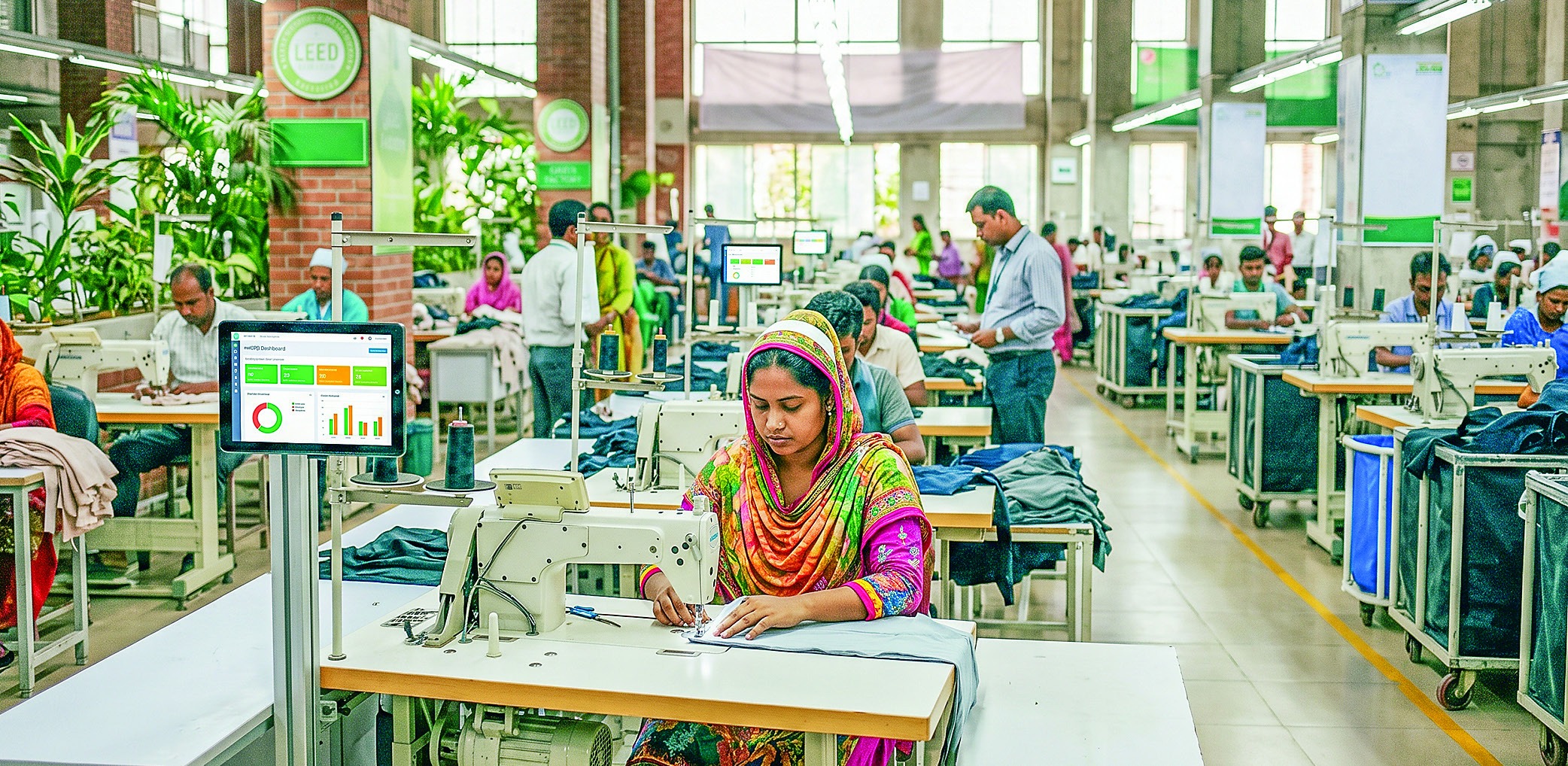
The Ready-Made Garment sector has propelled Bangladesh's socio-economic development, continuously evolving through competitive pricing, manufacturer commitment, and industrial adaptation. Having successfully navigated historical hurdles—including child labor eradication, quota phase-outs, and safety mandates—the industry transformed the Rana Plaza tragedy into a watershed moment, leading globally in green factory certifications.
Today's imperative is fundamentally different. Beyond static green credentials and baseline compliance, global buyers now demand active identification, prevention, mitigation, and remediation of human rights and environmental risks across entire supply chains. Consequently, Human Rights and Environmental Due Diligence (HREDD) has become an essential operational standard.
Shift in Regulatory Framework — From Compliance to Due Diligence
The EU’s Corporate Sustainability Due Diligence Directive (CSDDD) represents a major legal shift, moving responsible business conduct from voluntary audits toward structured, risk-based due diligence.
Adopted in 2024, the original CSDDD required large companies to address human rights and environmental impacts across their value chains. Although 2026 revisions under Directive (EU) 2026/470 raised applicability thresholds to EU firms with over 5,000 employees and €1.5 billion in turnover, as well as non-EU firms generating over €1.5 billion within the EU, indirect impacts remain significant for upstream suppliers. Consequently, due-diligence requirements continue to filter down to Bangladeshi manufacturers.
The revised framework prioritizes targeted and proportionate value-chain requests. Member States must transpose these simplified rules by July 26, 2028, with full enterprise compliance taking effect July 26, 2029.
This timeline creates a major strategic crossroads. As Bangladesh graduates from LDC status on November 24, 2026, the EU's three-year transition preserves duty-free access through 2029. Consequently, Bangladeshi exporters will lose tariff preferences in the exact year European buyers face mandatory CSDDD enforcement, converging two critical deadlines into one.
Who Shoulders Accountability?
European buyers retain primary legal liability but must manage supply-chain risks. Consequently, Bangladeshi suppliers will still receive requests for verifiable data regarding labor, environment, grievance systems, and sourcing.
Under Omnibus I, "protected undertakings" (up to 1,000 employees) can decline requests exceeding SME standards. However, most Bangladeshi RMG groups exceed this threshold, excluding them from protection. Moreover, this cap applies strictly to sustainability reporting, leaving due-diligence inquiries unconstrained.
At its core, HREDD requires companies to identify high-risk areas across value chains, prioritize them by severity and likelihood, prevent or mitigate adverse impacts, provide remediation, engage stakeholders, monitor progress, and report transparently.
From “Are you compliant?” to “Can you demonstrate how you identify, prioritise and manage your most significant risks?”
What Does This Mean for Bangladesh?
A Bangladeshi factory may not fall directly under the CSDDD, yet European buyers will still require verifiable data on working conditions, safety, wages, recruitment, environmental impacts, subcontracting, raw-material sourcing, grievance channels, and remediation. This shift transforms the buyer–supplier relationship. Rather than accepting periodic social audits, buyers will demand answers to probing questions:
- What are your most significant human rights risks?
- How did you identify and prioritize them?
- What visibility and control do you maintain beyond your tier-1 facilities?
- How do you monitor and manage subcontractors?
- What accessible channels exist for workers to raise grievances?
- What protocol is triggered when a serious violation is uncovered?
- Can you prove that corrective action plans yielded tangible results?
- Can your environmental and social data metrics be independently verified?
The Responsibility Spectrum Challenge
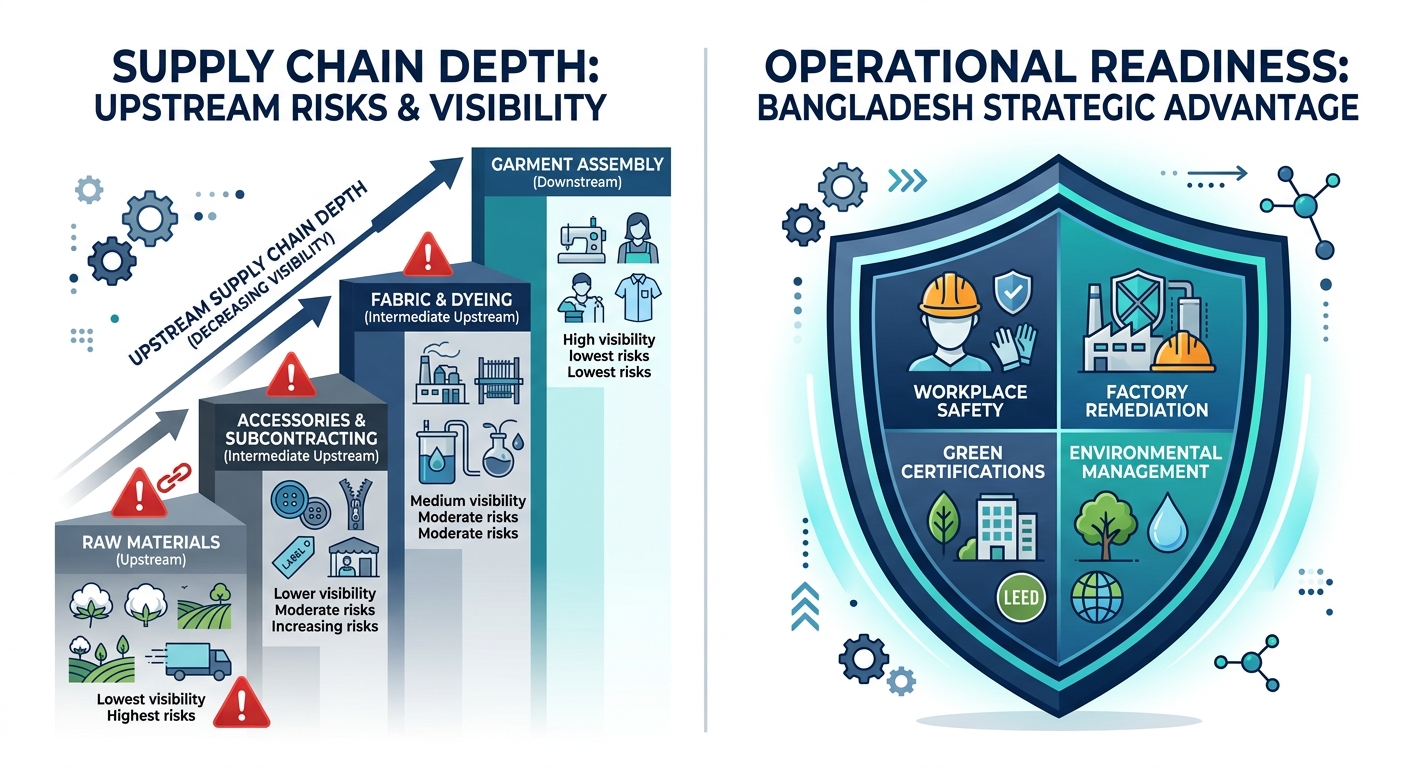
The apparel value chain extends past assembly into fabric mills, dyeing units, accessories, subcontractors, and raw materials. Risks become less visible and harder to monitor moving upstream. Consequently, even a compliant factory faces major exposure if upstream risks remain unmanaged. However, Bangladesh holds a strong strategic advantage. Years of targeted investment have established a robust ecosystem across safety, remediation, environmental management, certifications, and compliance. Industry actors already possess the expertise required to extend vigilance upstream effectively.
It Is Not Only an RMG Issue
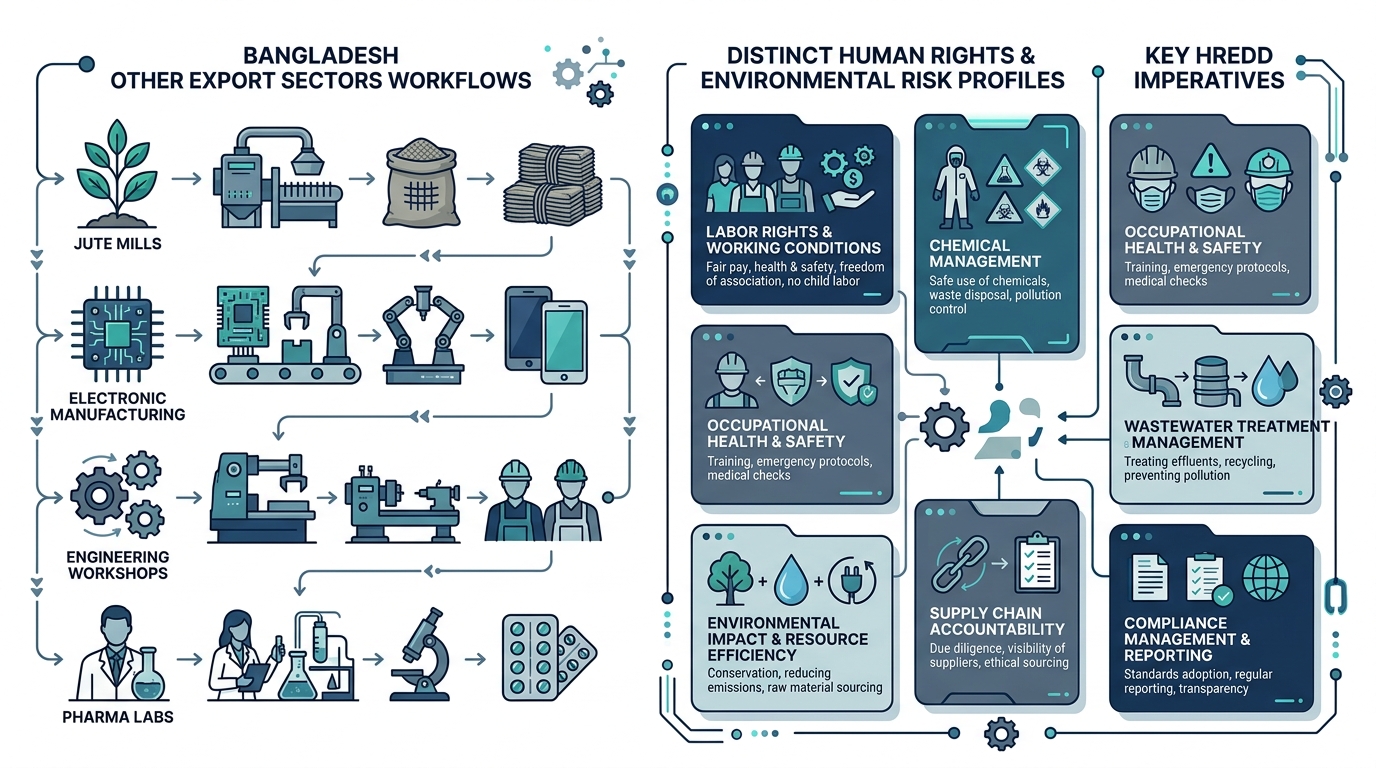
Although the RMG sector feels these pressures most visibly, HREDD is not exclusively a garment-sector issue:
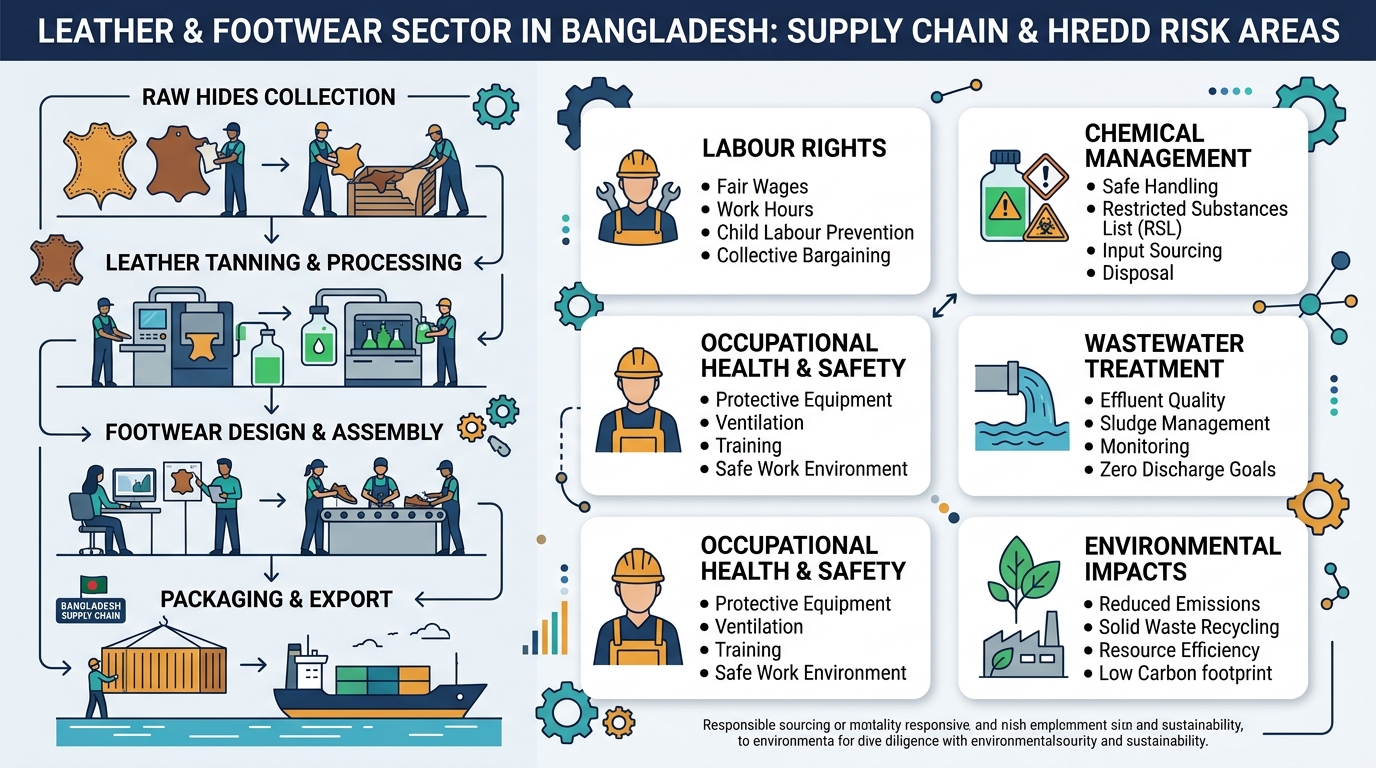
Leather & Footwear: Exporters must address labor rights, chemical management, health and safety, wastewater, and broader environmental impacts.
Agriculture & Food: Products face scrutiny over labor conditions, child/forced labor risks, land rights, environmental damage, and complex supply-chain traceability.
Other Sectors: Jute, light engineering, electronics, and pharmaceuticals maintain distinct human rights and environmental risk profiles.
Value-chain accountability is the common denominator. Other export industries cannot rely solely on product quality and factory-level compliance to satisfy future market expectations.
The Consequences: Risk — and Opportunity
The simplified CSDDD will not halt Bangladeshi exports. Instead, the real risk is commercial differentiation. Buyers will favor suppliers offering reliable sustainability data, while those with weak management face higher audits and costs. Transparent risk management gives proactive companies a competitive edge, making sustainability and labor standards vital for post-LDC market access.
Is Bangladesh Ready?
The answer is both yes and no.
Bangladesh has key structural strengths: a mature RMG compliance ecosystem, deep buyer relationships, factory-level environmental initiatives, international certification experience, and a growing pool of ESG professionals.
However, five critical operational gaps persist:
Supply-Chain Visibility: Oversight remains limited beyond Tier-1 suppliers.
Data Fragmentation: Disclosures sit scattered in spreadsheets and audit logs rather than centralized systems.
Remediation & Trust: Grievance channels require worker trust and verified, lasting solutions.
SME Capacity: Smaller suppliers lack technical and financial resources for complex due-diligence demands.
Data Verification: Bangladesh lacks a unified national framework to independently verify ESG data.
From Compliance Burden to Competitive Advantage
Bangladesh must shift from reactive audits to a structured HREDD ecosystem backed by verified ESG data and worker participation. Enterprises should prioritize major human rights and environmental risks, embedding mitigation into decisions to build institutional risk capability. Digital traceability tools and integrated ESG systems link buyers, factories, subcontractors, and suppliers in a transparent chain.
Key ecosystem actors can enable this through:
National Alignment: Establishing a framework drawing on UNGP, OECD guidelines, and international market standards.
Shared Infrastructure: Providing common tools, guidance, capacity building, and risk databases to support SMEs.
The Strategic Choice for Bangladesh
The CSDDD debate often focuses on EU regulatory burdens, but for Bangladesh, the core question is strategic: Will HREDD remain a buyer-driven mandate or become an export competitiveness strategy?
HREDD is an investment in market credibility and resilience. Post-LDC leadership requires proving safeguards are embedded across value chains, offering Bangladesh a major strategic opportunity. Bangladesh's next evolution must move:
- From factory-level compliance to full value-chain accountability
- From fragmented, departmental data to verified, centralized information systems
- From reactive audit responses to proactive risk management