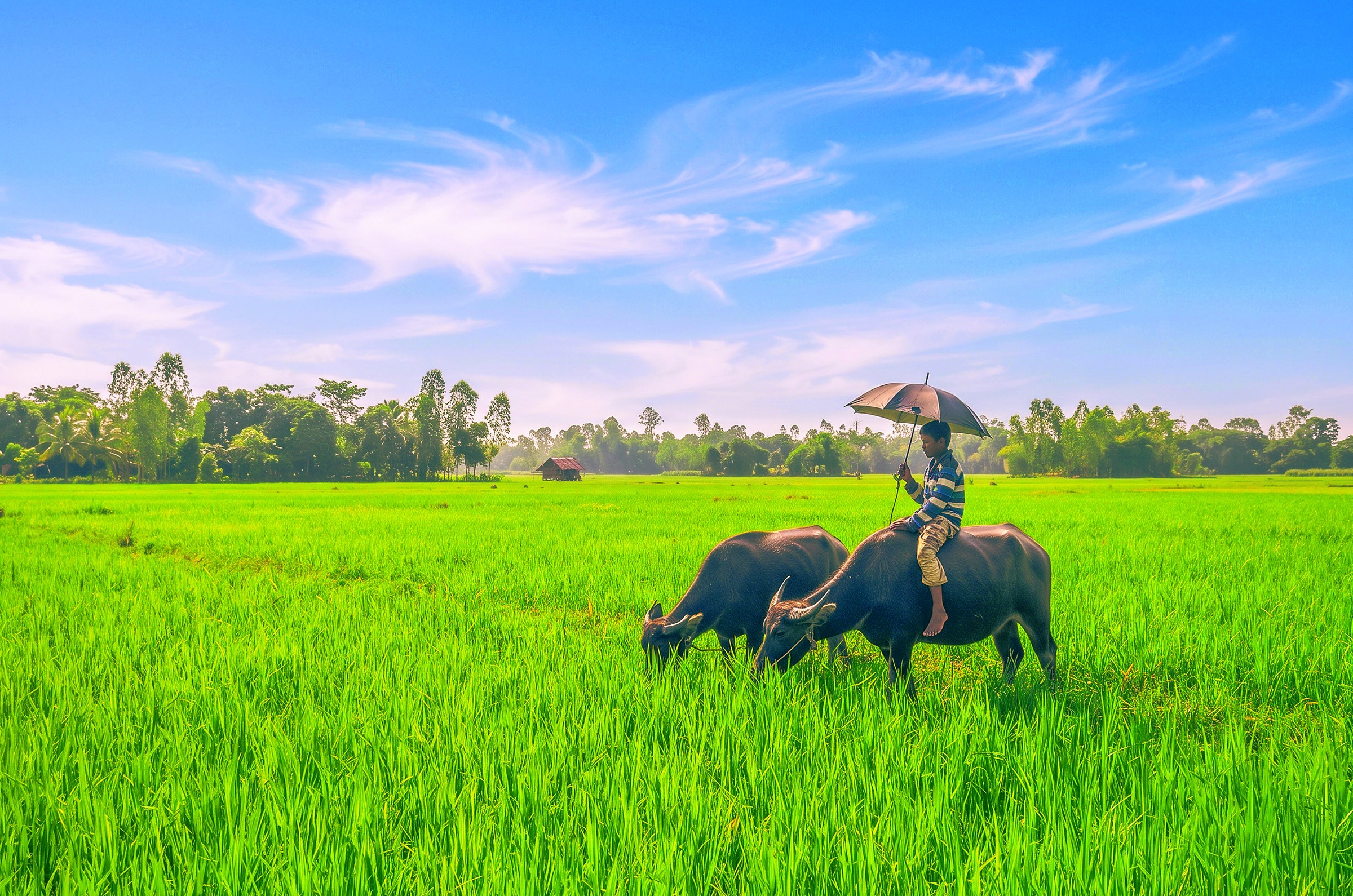
As the world confronts intensifying climate pressures, two nations that appear starkly different Saudi Arabia’s vast arid expanses and Bangladesh’s fertile yet vulnerable river deltas—share a profound stake in sustainable agriculture and food-water security. Both face the imperative of feeding growing populations while stewarding scarce or unpredictable natural resources. For Bangladesh, the challenges include rising salinity in coastal zones, monsoon floods, riverbank erosion, and the need to sustain rice-based food systems that underpin the livelihoods of millions. For Saudi Arabia, the constraints are extreme water scarcity, dependence on desalination and groundwater, and the historical tension between agricultural ambition and environmental limits.
My recently published book, Saudi Arabia’s Transformation: Uncertainty and Sustainability (Routledge, 2026), examines how the Kingdom is navigating these pressures under Vision 2030. My forthcoming volume on the Food–Water Security Nexus, resilience, and sustainable governance in Saudi Arabia and the Arab world extends this inquiry. Together they offer practical insights that, I believe, can enrich dialogue with Bangladeshi readers and policymakers at a moment when bilateral relations are expanding beyond traditional foundations into strategic cooperation on food security, climate resilience, and investment.
Saudi Arabia’s Agricultural Transformation Under Uncertainty
Saudi Arabia’s agricultural story is one of rapid expansion followed by deliberate recalibration. Earlier decades of water-intensive wheat self-sufficiency strained fossil aquifers. Vision 2030 reframed the sector around efficiency, technology, and strategic imports while preserving core production capacity. The result has been a shift toward controlled-environment agriculture, precision irrigation, hydroponics, and greenhouse systems that dramatically reduce water use per unit of output. Desalination capacity has expanded significantly, with renewable energy increasingly powering plants, while treated wastewater and rainwater harvesting techniques are being scaled.
These adaptations were not cost-free. They required policy coherence across water, energy, and food ministries, investment in research and extension, and a willingness to accept managed uncertainty—acknowledging that complete food self-sufficiency in an arid environment is neither feasible nor sustainable. The book argues that true resilience lies in adaptive governance: continuous monitoring of resource stocks, scenario planning for climate and geopolitical shocks, and the integration of economic, social, and environmental objectives—the classic triple bottom line of sustainability.
The Food–Water Security Nexus framework at the heart of my upcoming work insists that water, food, and energy cannot be governed in silos. Decisions about irrigation affect energy demand; energy choices shape the cost and carbon footprint of desalination; and both determine long-term food availability and affordability. In the Arab region, where renewable freshwater resources are among the lowest globally and import dependence for staples remains high, nexus thinking is no longer optional. It is a precondition for stability.
Relevance Across Climates: Lessons for Bangladesh
Bangladesh and Saudi Arabia operate in different hydrological realities, yet the underlying principles travel. Bangladesh enjoys higher average rainfall and extensive river systems, yet faces acute seasonal and spatial mismatches, groundwater stress in some regions, and climate-driven threats—salinity intrusion, prolonged droughts in the northwest, and extreme rainfall events. Climate-smart agriculture, water-use efficiency, and post-harvest loss reduction are therefore national priorities, as are resilient seed systems and diversified production.
Saudi experience offers several transferable lessons. First, the disciplined pursuit of water productivity—more crop per drop—remains valuable even in water-abundant settings. Technologies and management practices refined under extreme scarcity can be adapted to Bangladesh’s saline and drought-prone pockets. Second, integrated governance matters. Fragmented institutions that treat irrigation, drinking water, and energy separately tend to generate suboptimal outcomes. Bangladesh’s own efforts to strengthen inter-agency coordination and climate-resilient planning can draw encouragement from Saudi experiments in cross-sectoral policy design. Third, strategic partnerships and technology transfer accelerate progress. Saudi Arabia has invested heavily in agricultural innovation capacity; Bangladesh possesses deep expertise in rice breeding, salinity-tolerant varieties, and community-based water management. Reciprocal learning is both logical and mutually beneficial.

Recent events underscore practical interdependence. During the temporary closure of the Strait of Hormuz in early 2026, Saudi fertilizer supplies—particularly urea from producers such as SABIC—proved critical in helping Bangladesh maintain planting schedules and avoid sharper food-security risks. This episode illustrates how trade and logistics resilience directly affect agricultural outcomes. It also highlighted the potential for deeper cooperation in Agro-inputs, food processing, and supply-chain infrastructure.
The Bilateral Foundation and Emerging Opportunities
Saudi Bangladeshi relations rest on decades of people-to-people ties. More than three million Bangladeshis live and work in the Kingdom, forming one of the largest expatriate communities and a major source of remittances that support rural households and agricultural investment back home. Trade has traditionally featured Saudi fertilizers, energy products, and petrochemicals flowing eastward, with Bangladeshi garments and other goods moving in the opposite direction. In 2026, both governments have signaled a deliberate expansion beyond the manpower-and-remittances model. High-level meetings have identified food security, Agro-processing, fisheries, renewable energy, logistics, and infrastructure as priority areas for investment and technology partnership. Saudi interest in Bangladesh’s ports, special economic zones, and renewable energy projects, including solar, aligns with Bangladesh’s own development ambitions.
Bangladesh has already expressed interest in Saudi expertise on rainwater harvesting and afforestation, while the Kingdom’s Middle East Green Initiative and broader sustainability programs create natural points of contact. Expanding direct air connectivity and cargo rights further lowers barriers to the exchange of perishable produce, technology, and expertise. These developments create space for joint research platforms, demonstration farms, capacity-building programs for extension workers, and private-sector partnerships in climate-resilient value chains.
The diaspora itself can serve as a bridge. Bangladeshi professionals and entrepreneurs in Saudi Arabia, together with Saudi investors looking for high-growth agricultural and food-processing opportunities, can help translate policy dialogue into concrete projects. Research and knowledge-exchange linkages offer additional channels that Bangladesh’s strong agricultural research system is well positioned to utilize.
Toward Shared Stewardship
Sustainable agriculture is ultimately an act of intergenerational responsibility. In Islamic tradition, the concept of Khalifa—stewardship of the Earth—binds both societies. Saudi Arabia’s Vision 2030 and Bangladesh’s long-term development strategies share a commitment to balancing growth with environmental integrity and social inclusion. The Food–Water Security Nexus provides a practical language for that shared commitment.
My work has been guided by the conviction that uncertainty need not paralyze action. Saudi Arabia’s experience demonstrates that clear long-term vision, institutional adaptation, technological innovation, and international partnership can convert constraints into catalysts for more resilient systems. Bangladesh, with its dense population, dynamic agricultural research capacity, and proven ability to innovate under pressure, stands to gain from selective adaptation of these approaches while contributing its own hard-won knowledge of flood and salinity management.
As The Sustainability Voice launches its first issue, the timing is propitious. The coming years will test whether nations can move from parallel struggles with climate and resource stress to genuine collaboration. Saudi Arabia and Bangladesh already possess the human connections, the trade relationships, and the political goodwill to deepen partnership in sustainable agriculture and food-water security. What remains is the will to treat the nexus not as a technical checklist but as a shared strategic horizon.
The sands of Arabia and the rivers of Bengal may look dissimilar, yet both demand the same disciplined care. By exchanging experience, technology, and investment, our two countries can help secure not only their own food futures but a more resilient model of South–South cooperation for a warming world. The harvest of that partnership will be measured not only in tons of grain or cubic meters of water saved, but in the strengthened capacity of both societies to renew themselves, season after season, under conditions of change.