

Rising European Temperatures Accelerate Crop Growth and Reduce Yields
Higher temperatures across Europe are accelerating crop development, causing harvest cycles to mature considerably earlier than historical norms. Winter wheat in sections of the EU now reaches maturity up to 20 days faster than in 2000, with rapeseed and maize experiencing comparable shifts. Alongside shortened growth cycles, extreme heat and persistent drought are cutting crop output, as evidenced by France projecting a 35% decline in grain maize yields this year.
(Source: https://www.reuters.com/sustainability/cop/europes-crops-mature-earlier-due-climate-change-data-shows-2026-09-07/ )
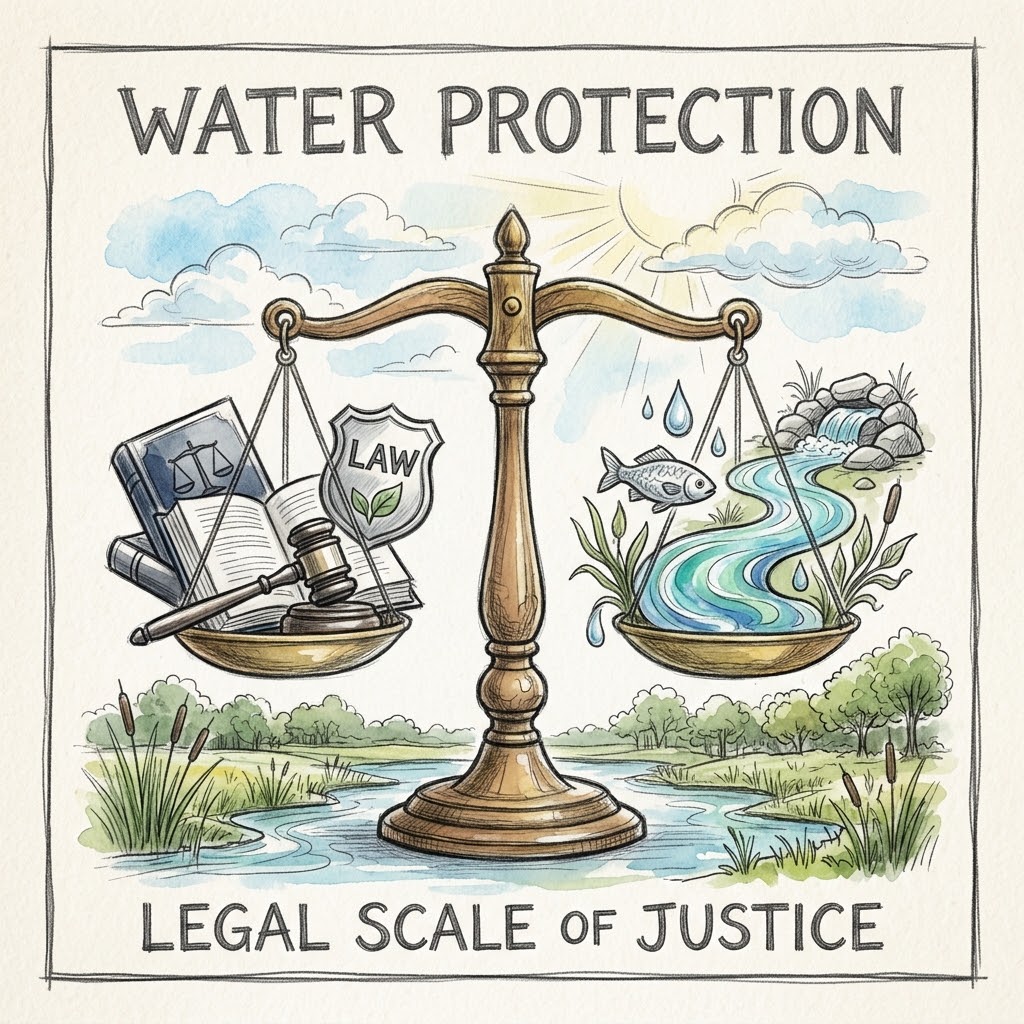
Environmental Groups File Legal Challenge Over EU Water Law Revisions
Environmental groups have launched a formal complaint against the European Commission regarding plans to simplify EU water legislation, citing inadequate evidence and insufficient public consultation. The proposed regulatory overhaul forms part of a broader drive to streamline permitting processes, responding to industry claims that strict environmental safeguards delay critical mining and strategic infrastructure projects.
(Source: https://www.reuters.com/business/environment/eu-faces-complaint-over-plan-simplify-more-environmental-laws-2026-09-08/)
Nepal Demands Climate Compensation Following $5 Billion Flood Damage
Nepal is requesting international climate justice funding after devastating floods caused an estimated $5 billion in infrastructure and economic damage. The claim underscores the severe economic toll climate-driven extreme weather inflicts on low-emission, highly vulnerable nations, adding momentum to global debates over who should cover loss and damage costs for climate recovery.
(Source: https://www.yahoo.com/news/videos/nepal-seeks-climate-justice-payment-164316013.html)
Solar Bonds Could Cut Rooftop Solar Costs for Households
A proposed UK Solar Bond framework aims to eliminate upfront costs and credit checks for residential rooftop solar installations, tying 25-year repayments directly to the property rather than the individual. Under this model, households could still achieve minimum net savings of £83 annually while simultaneously broadening renewable energy access and generating thousands of green jobs.
(Source: https://www.euronews.com/2026/09/04/how-solar-bonds-could-cut-your-energy-bills-without-upfront-installation-costs)
India Plans Mandatory Battery Storage for New Renewable Projects
Beginning in July 2027, India intends to mandate that all newly commissioned state-backed solar and onshore wind farms incorporate energy storage covering at least 10% of their total output for two hours. By July 2029, this storage requirement will double to four hours. The initiative aims to alleviate severe grid bottlenecks after transmission limits and midday supply gluts forced grid operators to discard roughly 14% of produced solar power between April and June.
(Source: https://www.reuters.com/business/india-proposes-mandatory-battery-storage-new-renewable-projects-july-2027-2026-09-04/)
Spain Pushes EU Climate Adaptation Fund as Losses Reach €822 Billion
Spain is pressing the European Union to establish a dedicated climate adaptation fund, implement mandatory adaptation targets, and mandate climate risk evaluations every five years. The push comes as EU nations report €822 billion in cumulative losses from extreme weather and climate events since 1980, with nearly 25% of those damages concentrated in just the four-year period from 2021 to 2024.
(Source: https://www.reuters.com/sustainability/cop/spain-urges-eu-create-climate-adaptation-fund-set-binding-targets-2026-09-04/)

London’s Low Emission Zone Delivers Measurable Health Gains
London’s Ultra Low Emission Zone (ULEZ) has driven marked drops in nitrogen dioxide levels, with studies connecting the cleaner air to improved pediatric lung development. While global hubs like Bogotá, Nairobi, and Sofia are adopting comparable clean air policies, broader implementation remains hampered by political pushback, false information, and financial concerns.
(Source: https://www.theguardian.com/environment/2026/aug/23/london-low-emission-zone-working-other-cities-cautious-clean-air)
Record Breaking CAN$70 Billion Clean Energy Investment Could Strengthen Canada’s Energy Leadership
Canada has unveiled plans for a landmark CAN$70 billion investment in wind and hydroelectric infrastructure across Quebec and Newfoundland and Labrador, aiming to add 14,000 MW of renewable power capacity. The historic expansion is projected to generate 23,000 jobs, add CAN$31 billion to national GDP, and reinforce energy security while boosting low-carbon electricity exports both domestically and to the United States.
(Source: https://www.euronews.com/2026/08/18/what-could-north-americas-largest-clean-energy-investment-in-history-mean-for-renewables)
Japan Is Turning Flood Resilience Into an Economic Strategy
Japan is integrating mega-infrastructure, eco-friendly nature-based methods, and digital monitoring to mitigate flood risks while driving economic growth. Landmark initiatives like Tokyo’s subterranean flood defense system have mitigated massive financial losses, spurred commercial investment, and created jobs, complemented by rural measures like paddy field dams and smart sensors. By framing climate adaptation as a tool for economic stability, Japan turns resilience into a core driver of long-term competitiveness and infrastructure security.
(Source: https://www.weforum.org/stories/climate-action/japan-climate-flood-resilience-infrastructure/)