
EU Restricts Destruction of Unsold Clothing
The European Union has banned large companies from destroying unsold clothing and footwear, with medium-sized businesses to follow the rule from 2030. Companies are required to prioritise resale, donation, repair or refurbishment, while any permitted destruction must be supported by evidence and reported annually. The measure seeks to address the estimated 264,000–594,000 tonnes of textiles destroyed in Europe each year.
(Source: https://environment.ec.europa.eu/news/ban-destruction-unsold-clothes-and-shoes-enters-application-2026-07-17_en?utm_source=chatgpt.com)
August 2026 Ties as the Hottest Month Ever Recorded
August 2026 matched July 2023 for the highest global temperatures ever recorded, climbing 1.65°C above pre-industrial baselines. Oceans outside the polar zones similarly spiked to unprecedented thermal highs. Across Western Europe, relentless heatwaves and persistent drought conditions combined to deliver the region's warmest summer to date.
(Source: https://climate.copernicus.eu/copernicus-august-was-worlds-joint-hottest-month-record-pushing-global-temperatures-back-above)
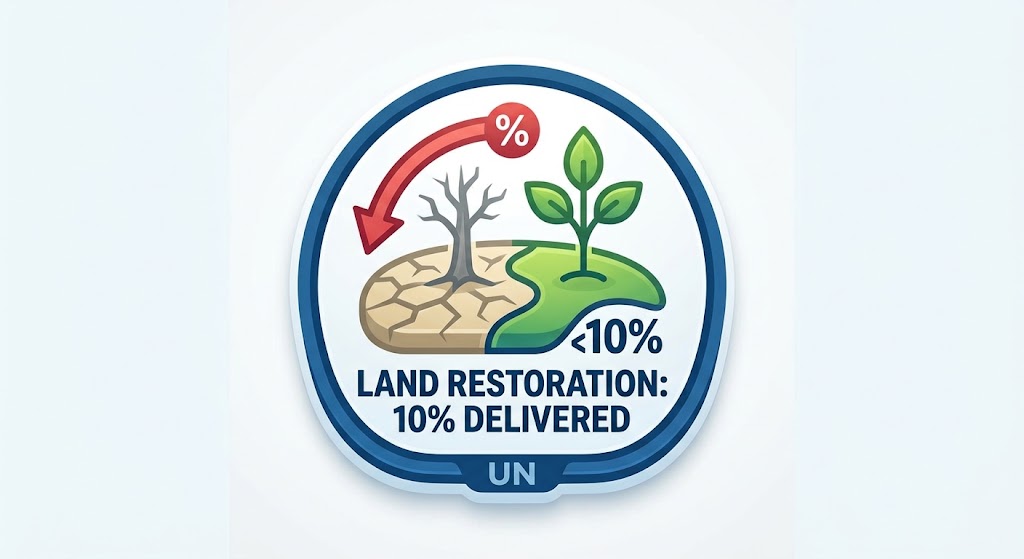
Countries Have Delivered Just 10% of Their Land Restoration Pledges
Nations have successfully restored 124.3 million hectares of degraded land through UN-backed programs—representing a mere 10.4% of their overall promises. With nearly 40% of the Earth's land area already degraded, this sluggish momentum jeopardizes global food supplies, clean water access, biodiversity, and human livelihoods, pulling the world further off course from its 2030 restoration targets.
(Source: https://www.reuters.com/legal/litigation/countries-fall-far-short-pledges-restore-stricken-land-report-shows-2026-08-21/)
Sustainability Has Entered Its Valuation Era
Companies are raising the bar for green investments, insisting on concrete proof that sustainability efforts boost margins, improve cash flow, strengthen resilience, and fuel growth. While 60% of executives factor environmental risks and opportunities into their financial strategies, only 19% actually measure the tangible financial returns. Moving forward, the survival of corporate sustainability initiatives hinges on translating environmental performance into rigorous financial models that can secure capital and direct strategic investment.
(Source: https://sustainablebrands.com/read/sustainability-has-entered-its-valuation-era)
UNEP Says Exceeding 1.5°C Is Now Widely Assessed as Unavoidable
According to the UN Environment Programme, existing policies make surpassing 1.5°C of global warming virtually certain. However, limiting both the severity and length of this temperature spike remains possible. Rapidly ramping up emission cuts and adaptation measures is essential to soften the blow to ecosystems, human populations, and global markets, allowing temperatures to drop back below the target sooner.
(Source: https://www.unep.org/resources/limiting-overshoot-navigating-exceedance)
German Wind and Solar Output Outpaces Fossil Fuels
In 2025, wind and solar energy generated 225 terawatt-hours (TWh) of power in Germany, reaching 44% of total electricity production and narrowly overtaking fossil fuels at 43%. This milestone reflects over twenty years of scaling up renewables. Nevertheless, persistent coal usage, upcoming natural gas developments, and electrical grid bottlenecks continue to threaten the nation's 2030 and 2045 climate goals.
(Source: https://www.carbonbrief.org/analysis-wind-and-solar-power-overtake-fossil-fuels-in-germany-for-first-time-ever)