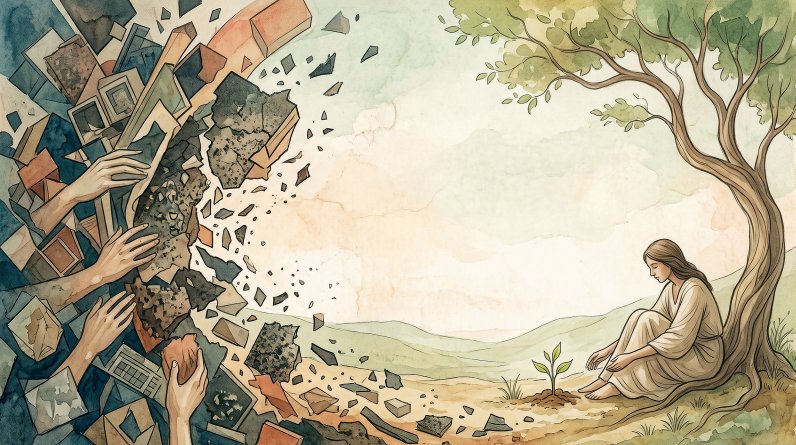
In a world of scarcity, excess and longevity science, the foundations of good health remain surprisingly simple.
For most of human history, simply staying alive was an achievement.
A few centuries ago, average life expectancy at birth in much of the world was well below 50 years. Infectious disease, unsafe childbirth, contaminated water, malnutrition, injuries and childhood mortality routinely ended lives that today might have continued for decades.
Then more recently the game changed.
Clean water and sanitation improved. Vaccines and antibiotics-controlled diseases that once devastated communities. Food became more reliable. Medicine learned to treat trauma, hypertension and countless other conditions. Maternal and infant mortality declined dramatically.
Human beings began living much longer.
But that brought us into a new territory.
Today, many of the diseases occupying our attention are different: cardiovascular disease, diabetes, cancer, dementia and other chronic conditions that become increasingly important as populations age. Some are consequences simply of surviving long enough to develop them. But many are also influenced by what happens during the decades before diagnosis-what we eat, how much we move, how we sleep, our metabolic health, our social environment and our exposure to chronic stress.
We successfully changed many of the threats outside us.
Now we are discovering the consequences of how we live in today’s world.
Scarcity and Abundance: Both have Unique Health Challenges
When the Problem Is Too Little-and Too Much
There is a clear and visible contradiction in modern health.
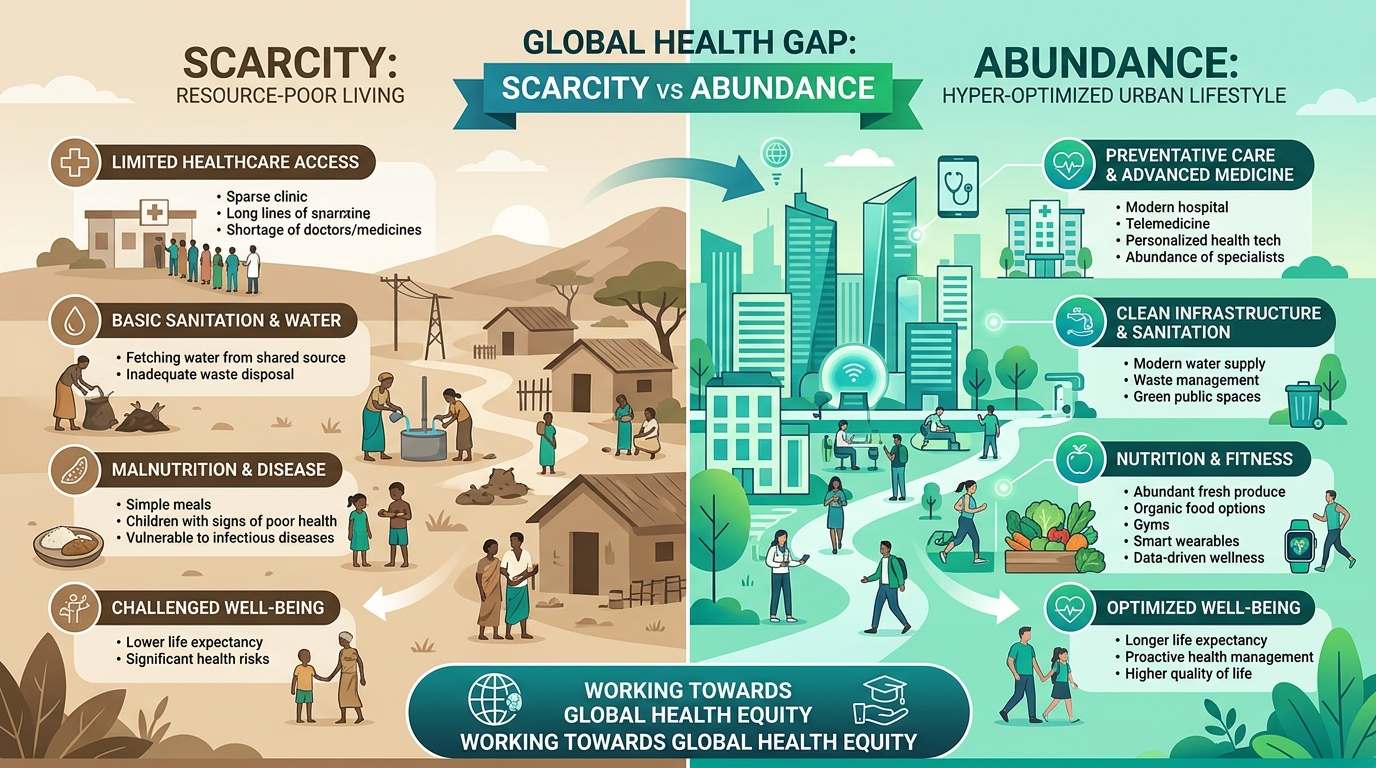
Resource poor communities, in millions, still live with inadequate nutrition, unsafe environments, limited healthcare and poverty. At the same time, resource rich societies struggle with diseases associated with excess calories, highly processed foods, sedentary lifestyles and chronic consumption.
We have hunger and obesity on the same planet.
We have people without access to basic healthcare while others continuously measure sleep stages, glucose, heart-rate variability and dozens of laboratory biomarkers in an effort to optimize health.
One part of humanity struggles with scarcity.
Another increasingly struggles with abundance.
That distinction matters when we discuss sustainability and health because there is a good case to be made that more resources do not automatically produce more health.
After basic needs are met, the relationship becomes considerably more complicated.
As wealthy societies live longer, a new question has emerged:
Can we live even longer-and remain healthy while doing it?
That is an important scientific question. But it has also become a commercial one.
We are offered supplements, natural extracts, synthetic compounds, protein formulations, specialized diets, continuous glucose monitors, genetic tests, biological-age tests, sleep trackers and increasingly sophisticated imaging and laboratory measurements.
Should we eat more protein? Less meat? More plants? Build more muscle? Fast for sixteen hours? Take a particular molecule? Measure another biomarker?
The underlying science can be fascinating, and some of these advances may eventually produce meaningful improvements in human health.
The danger comes when an interesting piece of biology becomes a blanket theory of everything.
Human biology rarely operates through a single linear relationship. Change one variable and dozens of interconnected systems may respond. A biological pathway that looks compelling in isolation may behave very differently inside an entire human being living within a family, community and environment.
We understand pieces of biology extraordinarily well.
Biology itself remains considerably more complicated than our pieces.
Perhaps that should make us a little humbler about engineering longevity.
Perhaps instead of asking only what molecule, device or intervention might extend life, can we ask a simpler question?
How do people who remain healthy for a very long time actually live?
This is part of what made observations from so-called Blue Zones-communities associated with unusual concentrations of healthy older people-so intriguing.
There are legitimate scientific debates about precisely how exceptional some of these populations are and how longevity records should be interpreted. But the lifestyle patterns associated with healthy aging are striking precisely because they are so unremarkable.
People move regularly, often without calling it exercise.
They eat relatively simple foods, frequently produced locally and with a substantial plant component.
They maintain relationships. They sleep. They have roles within families and communities.
They experience purpose-the reason to get up tomorrow may be caring for grandchildren, tending a garden, participating in community life or simply making sure the goats get fed.
And importantly, these communities did not require extraordinary wealth to produce these behaviors and longevity outcomes.
Nobody needed a wearable device to remind a shepherd that he had walked enough.
Perhaps one of the most interesting lessons of longevity is that the fundamentals are surprisingly inexpensive.
Health May Be a Sustainability Problem.
Healthy living intersects with ESG and sustainable development.
A society designed for health may also look remarkably similar to a society designed for sustainability.
Walkable communities encourage movement while reducing dependence on vehicles.
Fresh, minimally processed local foods can support health while strengthening local food systems.
Strong communities provide social connection while building resilience.
Cleaner air, safe water, access to green spaces, adequate sleep, reasonable working conditions and reduced chronic stress benefit people regardless of income.
These are not merely individual lifestyle choices. They are questions of how businesses, cities and governments design the environments in which choices are made.
Telling someone to walk more has limited value if we build communities where walking is unsafe.
Advising people to eat well means something different when healthy food is inaccessible or unaffordable.
Promoting stress reduction while designing workplaces around chronic exhaustion misses the larger system entirely.
A healthy lifestyle therefore cannot be separated from equity.
Perhaps Health Needs Less Optimization-and More Balance?
Modern medicine remains essential. Vaccines, medications, surgery, diagnostics and technology have helped create the longer lives we enjoy today. When disease occurs, we should use the best evidence-based medicine available.
But medicine and technology should supplement the foundations of health, not become substitutes for them.
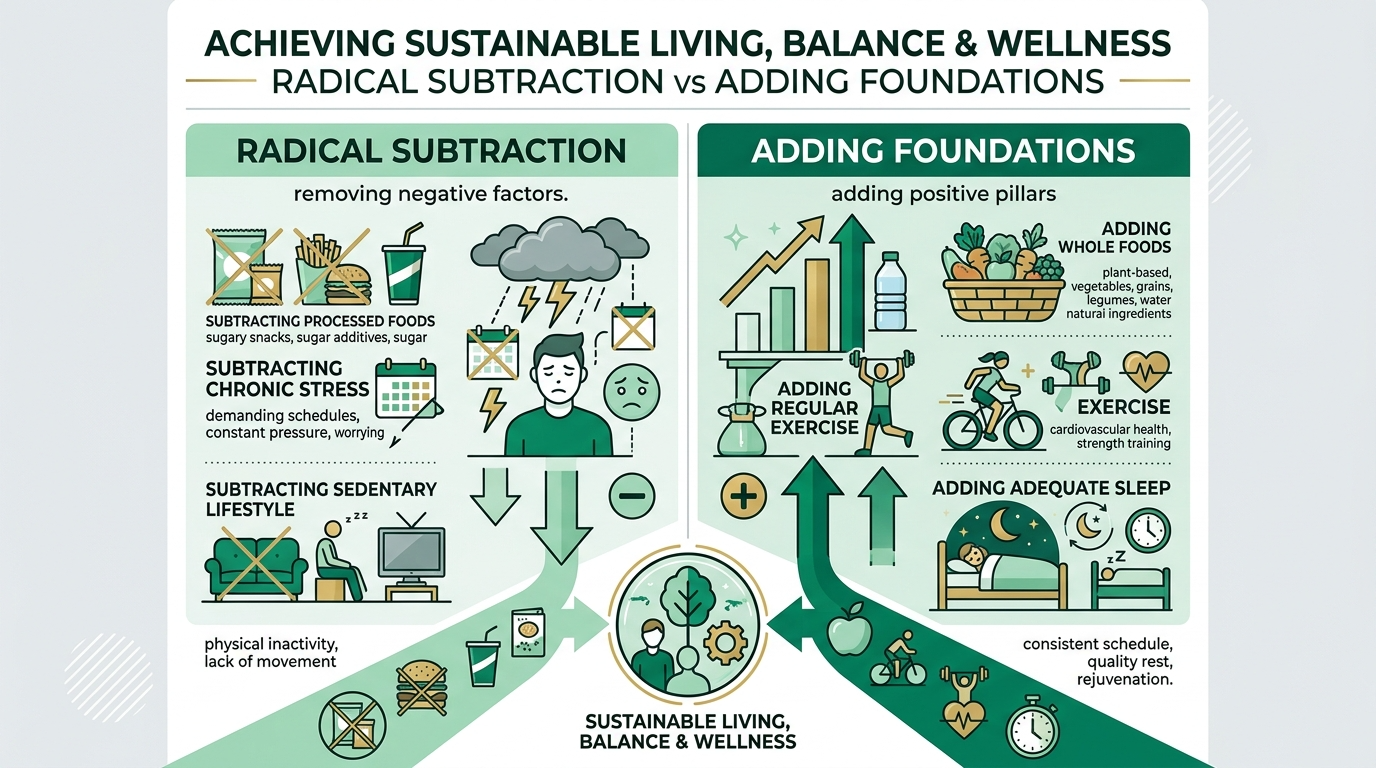
The longevity industry often asks us to add something: another supplement, another measurement, another intervention.
Perhaps an equally important question is what we should remove.
Excess.
Chronic stress.
Sedentary time.
Highly processed consumption.
Social isolation.
Sleep deprivation.
And perhaps the belief that every biological problem requires another product?
The future of health will undoubtedly contain extraordinary technologies. We should welcome those that demonstrate genuine benefit.
But we should not become so fascinated by our ability to measure and manipulate biology that we overlook what generations of ordinary human life have already taught us.
Eat reasonably. Move regularly. Sleep adequately. Stay connected. Find purpose. Avoid excess. Use medicine wisely when it is needed.
The most sophisticated answer to longevity may ultimately be a surprisingly sustainable one.
Sometimes progress is not discovering something new. It is recognizing the value of what was already in front of us.