


Picture a bank's finance team on the last day of the quarter. Papers everywhere. Numbers to double-check. A rule called IFRS 9 hangs over everyone's head like a storm cloud.
To most people in that room, IFRS 9 feels like nothing more than a headache — a mountain of paperwork about loans and losses that has to be climbed before anyone can go home. But here's a surprise: buried inside that dry accounting rule is one of the smartest ideas in modern banking. And the banks that figure this out end up not just safer, but more profitable, too.
A Rule about Seeing Trouble Coming
IFRS 9 asks banks to do something quite sensible when you think about it: keep a constant eye on every loan they've made, and flag it the moment there's real evidence it's heading for trouble — not three months later, but right away.
Loans get sorted into three simple buckets. Healthy loans sit in Stage 1. Loans showing early warning signs move to Stage 2. Loans that are already in serious trouble land in Stage 3. Each stage requires the bank to set aside more money to cover potential losses — a financial cushion for what might go wrong.
It's a good idea on paper. The trouble is, most banks aren't equipped to actually follow it in real time. And that gap is costing them more than they realize.
Old Systems, New Rules
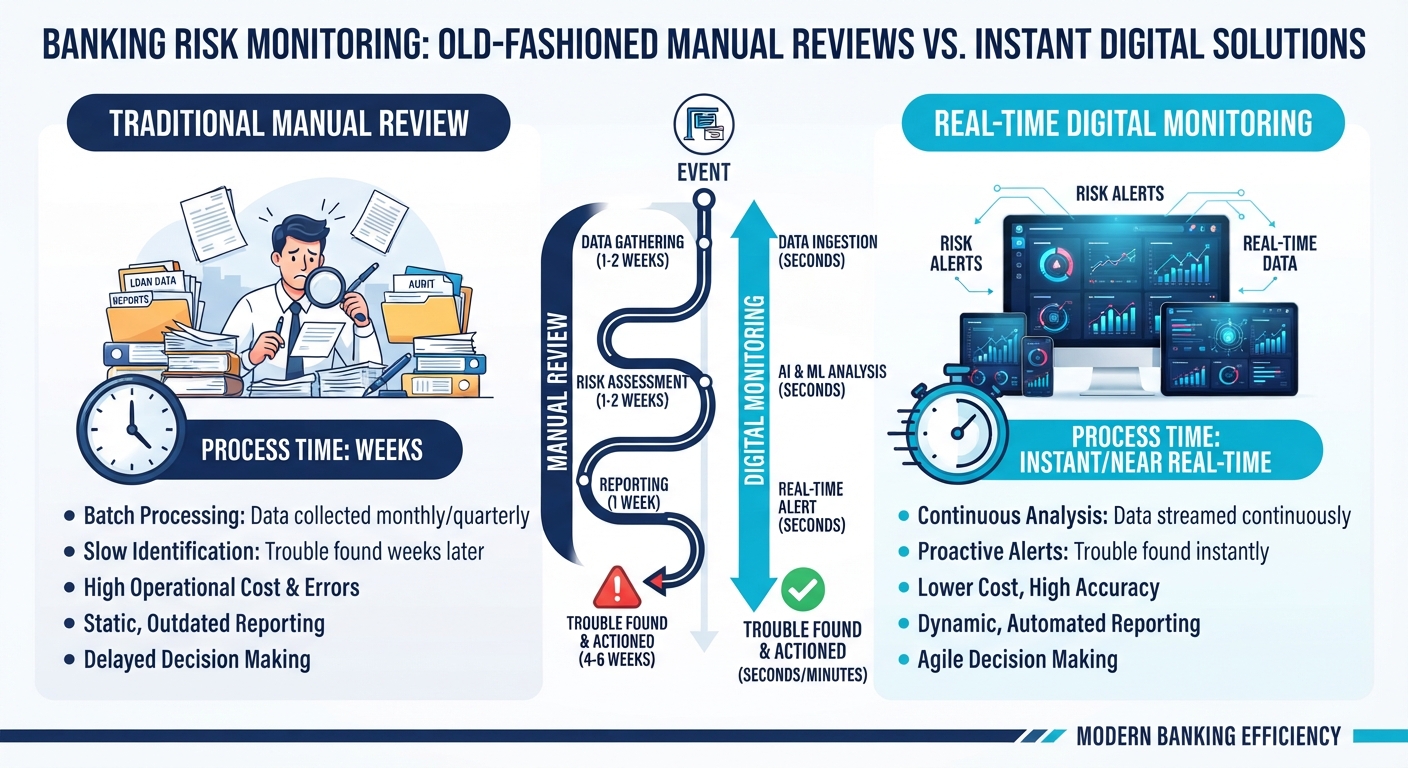
Here's the mismatch nobody talks about enough. IFRS 9 wants banks to track every single loan — its payment history, the value of whatever collateral backs it, how the broader economy is trending — updated continuously, all in one place.
But most banks' computer systems were built decades ago to do one thing well: record that a payment was made. They were never designed to watch, in real time, whether a borrower's situation is quietly getting worse. So instead, risk gets tallied up in batches, branch by branch, stitched together by hand once every three months — with the credit team, the collateral team, and the treasury team often working from entirely separate records that don't talk to one another.
Banks that fix this — that connect the dots and update the picture continuously — get something remarkable: the very same system that produces their official numbers for regulators also gives them early warnings, sharper loan pricing, and better cash planning. All from the same investment.
The Six Weeks where Trouble Hides
Here's a number worth remembering: a bank relying on old-fashioned manual review typically takes 30 to 45 days to notice that a loan has slipped into trouble. A bank with modern, connected systems can catch the very same problem within a day or two.
That six-week gap isn't just slow — it's dangerous. It's exactly the kind of window where a troubled loan to a well-connected borrower can quietly get rolled over, or a problem can be swept under the rug until the next reporting deadline forces someone to deal with it. Automatic, computer-generated tracking leaves a paper trail that's much harder to quietly erase than a manual sign-off. Shrink that window, and you shrink the opportunity for mischief.
What a Downgrade Really Costs
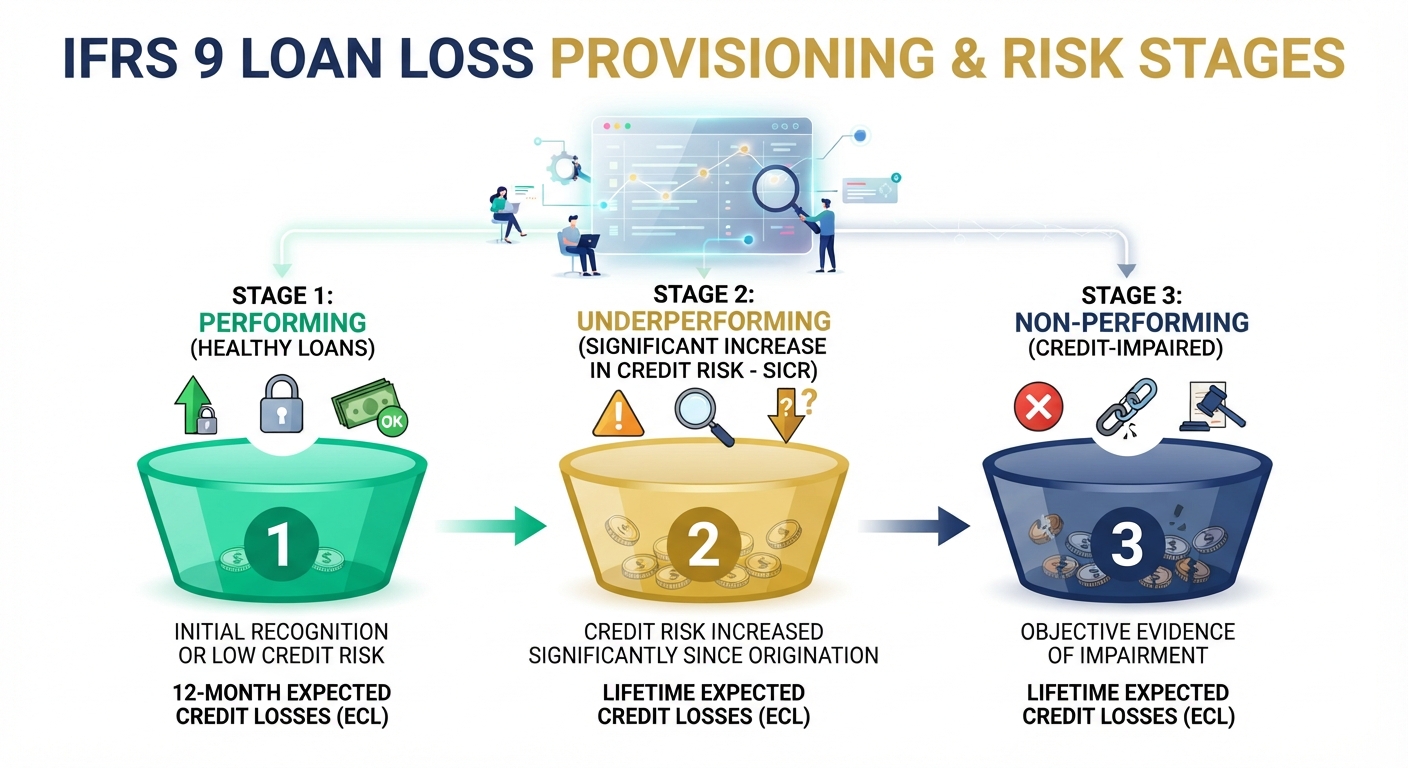
Let's put real numbers on this. Say a bank has lent out 500 million taka (roughly the size of a mid-sized corporate loan) and expects to recover 55 cents on the dollar if things go badly. While the loan is healthy, the bank sets aside about 2.25 million taka to cover possible losses. The moment that loan shows real signs of trouble and moves to Stage 2, that reserve jumps to 9 million taka — four times as much, practically overnight.
Catch the warning signs early, with real-time monitoring, and the bank's risk team gets months of breathing room to fix things — restructure the loan, ask for more collateral, or scale back exposure — before the problem gets that expensive.
Are you Really Making Money on that Loan?
Here's something most people don't realize: a loan that looks profitable on paper might not be, once you account for the real cost of the risk you're taking on.
Take a one-year loan of 500 million taka, priced at an 11% interest rate. After you subtract the cost of funding it, the expected losses, the cost of the capital set aside to cover it, and day-to-day operating costs, the bank actually nets about 8 million taka in true, risk-adjusted profit — a real return of roughly 17.8%. Without solid, IFRS 9-quality data, banks often don't discover the real cost of a loan's risk until it turns into an actual loss.
Money Sitting Idle for No Good Reason
When banks can't clearly see which loans are quietly souring, they tend to play it extra safe — holding much bigger cushions of cash than they truly need, just in case. A bank might hold a liquidity cushion of 130%, well above the 100% regulators require, simply because it can't confidently predict what's coming.
Give that same bank clear, real-time visibility, and it might comfortably operate at 115% instead — freeing up an amount equal to roughly 15% of its safety cushion. On a large bank's balance sheet, that can mean tens of billions of taka released from sitting idle and put to work as new loans instead.
A Gentle Slope Instead of a Cliff
Under the old way of doing things, a bank might carry very light loss reserves for years during good times — only to be blindsided when a downturn hits, forcing reserves to jump from around 1% of the loan book to 7% or 8% almost overnight. That kind of shock can force a bank into fire sales or emergency fundraising.
A well-built early-warning system spreads that same recognition out gradually — a little more each quarter as economic conditions soften — so the bank feels the change coming, rather than being blindsided by it.
The Real Lesson for Bank Leaders
None of these benefits — better oversight, smarter risk management, honest pricing, lighter cash cushions, and a steadier ship through hard times — come from the accounting rule itself. They come from the technology built to actually live up to it.
Treat IFRS 9 as just another box to check each quarter, and that's all it will ever be. But treat it as an investment — owned jointly by the risk team, the finance team, and the technology team — and it quietly pays for itself many times over: catching problems sooner, pricing loans more honestly, and building a bank that's ready for the next storm instead of one still writing up a report about the last one.