Historical Foundation & The Evolving SDG Landscape
Nearly four decades ago, the World Commission on Environment and Development published the Brundtland Report, defining sustainable development as meeting present needs without compromising future generations. It paved the way for the 1992 Rio Summit—spawning UN conventions on climate, biodiversity, and desertification—and led to the Millennium Development Goals in 2000 and 17 Sustainable Development Goals in 2015.
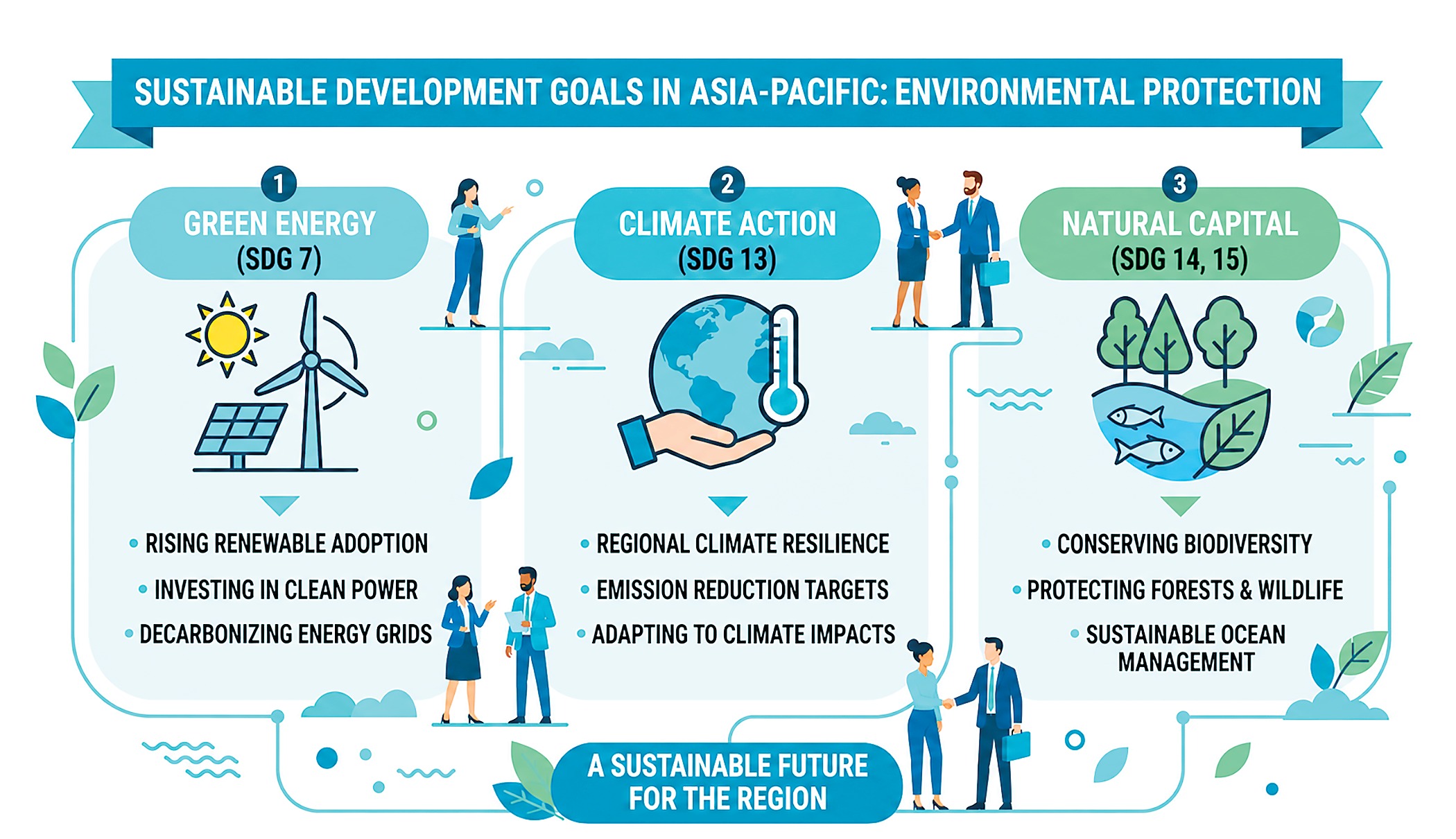
Over three decades, the Asia-Pacific region lifted hundreds of millions out of poverty, expanding basic services. However, rapid urbanization, manufacturing, data centers, and a growing middle class now severely strain land, forests, water, and air quality.
The key question is no longer if economic growth can continue, but whether it can be sustained without destroying essential environmental resources. The challenge requires scaling successful approaches to curb climate change, biodiversity loss, and resource extraction, placing sustainability at the center of development.
2026 Regional Progress & Critical Environmental Vulnerabilities
The 2026 Asia-Pacific SDG progress report highlights gains in poverty reduction, health, and industrialization, but warns that environmental degradation and inequality threaten these advances. Climate action (SDG 13) is regressing rapidly due to high disaster vulnerability and continued greenhouse gas emissions, while biodiversity loss and land degradation hamper life on land (SDG 15). At the current pace, 88% of measurable targets will be missed, indicating an unsustainable trajectory requiring urgent correction.
The IPBES assessment reveals declining regional biodiversity and ecosystem health, impacting food security, livelihoods, and climate resilience. However, regional variations exist: forest cover shrank in Southeast Asia due to timber extraction, biofuel plantations, and agriculture, but increased in Northeast and South Asia between 1990 and 2015.
UNESCAP's 2025 report identifies air pollution as a major health and economic threat causing premature deaths. UNEP-CCAC estimates ASEAN health-related pollution costs could reach 1.6–2.1% of GDP by 2030 without stronger action. Integrated climate and clean-air policies offer a solution, as transport, fossil fuel combustion, and industrial emissions drive both challenges.
As the world's most climate-exposed region, Asia-Pacific faces compound risks: agricultural heat stress, shifting rainfall, warming seas, coastal erosion, urban flooding, and air pollution. The 2026 Climate Ambition Review notes over 80% of the population is exposed to multiple climate hazards, with severe risks projected for billions by 2050, straining public budgets and infrastructure.
Greenhouse Gas Footprint & The Economic Cost of Inaction
The Asia-Pacific region generates over 50% of global greenhouse gas emissions and more than 60% of global fossil fuel-related carbon dioxide emissions. These figures highlight where many of the world's most climate-vulnerable populations reside, meaning the region's development path will shape global climate outcomes.
The Asian Development Bank’s Asia-Pacific Climate Report 2024 warns that high-end emissions could shrink GDP across developing Asia and the Pacific by 17% by 2070 and by 41% by 2100. Furthermore, annual adaptation needs are estimated at $102 billion to $431 billion—far exceeding the $34 billion mobilized in 2021–2022—excluding loss and damage costs.
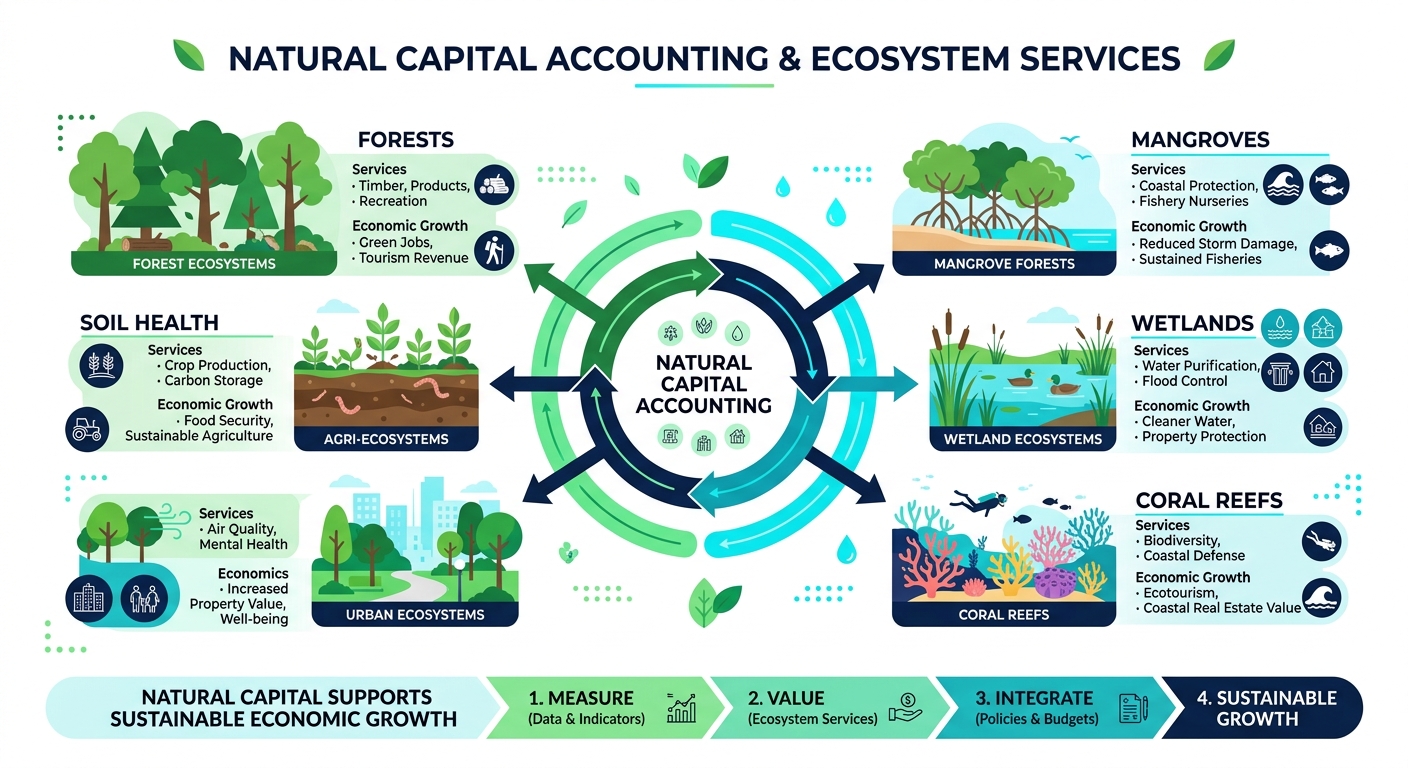
Historically, natural resources like land, water, and ecosystems were viewed merely as economic inputs rather than foundational infrastructure. Functions such as forests regulating water, mangroves buffering storm surges, and wetlands filtering floods directly support economic activity.
According to ADB’s 2025 report Unlocking Nature for Development, roughly 75% of the region’s GDP depends directly or indirectly on environmental resources. Consequently, degrading ecosystem services risks significant economic value and resilience beyond environmental loss.
Valuing Nature as Core Infrastructure
The traditional contrast between environment and development is obsolete; the real distinction lies between development that plans for environmental limits and development that bears the financial toll of ignoring them. Infrastructure and agricultural choices only appear cheap or profitable when health, climate impacts, and biodiversity loss are excluded from financial calculations. Ultimately, these hidden costs manifest as higher food prices, public health burdens, and disaster losses.
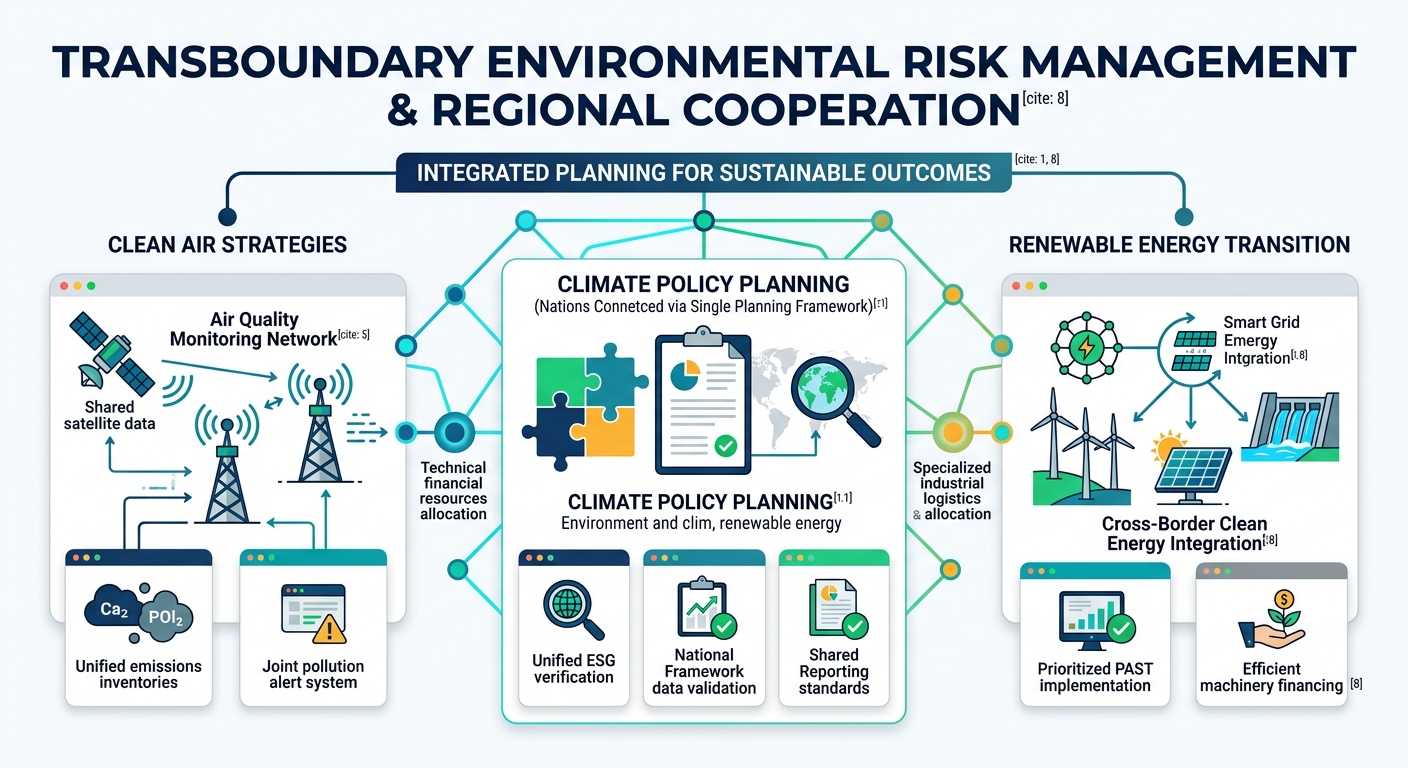
In response, climate considerations are moving to the center of economic planning, including integration into sectoral policies. Initiatives to reverse ecosystem loss are adopting nature-finance tools—such as green bonds and biodiversity credits—alongside funding mechanisms like the Kunming Biodiversity Fund. Additionally, the region has established the Regional Action Programme on Air Pollution (RAPAP) to drive science-based cooperation and cleaner air.
To implement concrete action, Asia-Pacific countries have outlined climate commitments through strategies like Nationally Determined Contributions (NDCs), low-emission strategies, and National Adaptation Plans (NAPs). These frameworks focus on expanding renewable energy, modernizing grids, increasing storage, boosting building efficiency, and promoting clean transport. Crucially, the transition must be fair: supporting fossil-fuel-dependent workers with new career paths, offering poor households affordable clean energy, and providing cities with public transport and cooling strategies to cut emissions, build resilience, and combat inequality. A technical transition omitting people and environmental sustainability cannot endure. Similarly, National Biodiversity Strategies and Action Plans (NBSAPs) set explicit targets, priority actions, investment needs, and monitoring frameworks.
Social Equity & Adaptive Capacity
Because climate impacts and costs are unevenly distributed, countries' and communities' adaptive capacity will dictate who suffers most from environmental degradation, climate change, biodiversity loss, and air pollution. Low-income households often reside in high-risk zones, depend on natural resources, and lack savings or institutional support. Small island states face sea-level rise and storm surges, mountain communities endure glacial melt and landslides—as highlighted by Nepal's devastating glacial flood—megacities face heat, flooding, and pollution, and rural families deal with crop losses and water insecurity. Ultimately, the environment forms the underlying condition determining whether social progress and economic development can be sustained.
Reforming Subsidies & Financing Adaptation
Governments must transform decision-making by integrating natural capital accounting into national planning, budgeting, and investments, as well as screening infrastructure for climate and biodiversity risks prior to construction. UNEP’s State of Finance for Nature report highlights that environmentally harmful public subsidies reached $2.4 trillion in 2023. To reverse this, governments should reform or repurpose these subsidies, use fiscal tools to deter environmental damage, and align budgets with the Rio Conventions. Crucially, key ministries—including finance, planning, energy, transport, agriculture, and environment—must operate from a shared risk map to effectively address cross-border environmental threats.
Overcoming bureaucratic boundaries requires recognizing and addressing transboundary risks, as shared river basins, oceans, atmospheric pollution, and supply chains prevent any single nation from managing these challenges alone. Regional cooperation is essential across power connectivity, early warning systems, climate data, resilient trade, green technology standards, and climate and nature finance. Regional institutions can help countries learn from one another, reduce first-mover risks, and raise collective ambition as they develop stronger national climate, low-emission, biodiversity, and air pollution strategies.
Transboundary Governance & Regional Leadership
With its scale, innovation, and urgency, the Asia-Pacific region can lead a new, sustainable development model. Achieving this leadership requires moving beyond pledges to incorporate nature into economic decision-making, put people at the center of the transition, and treat environmental resources as development’s foundation rather than mere inputs. The Brundtland Report's core question remains critical: can today's choices expand human well-being without limiting tomorrow's choices? For the Asia-Pacific region, the answer will define both its future and the world's.