

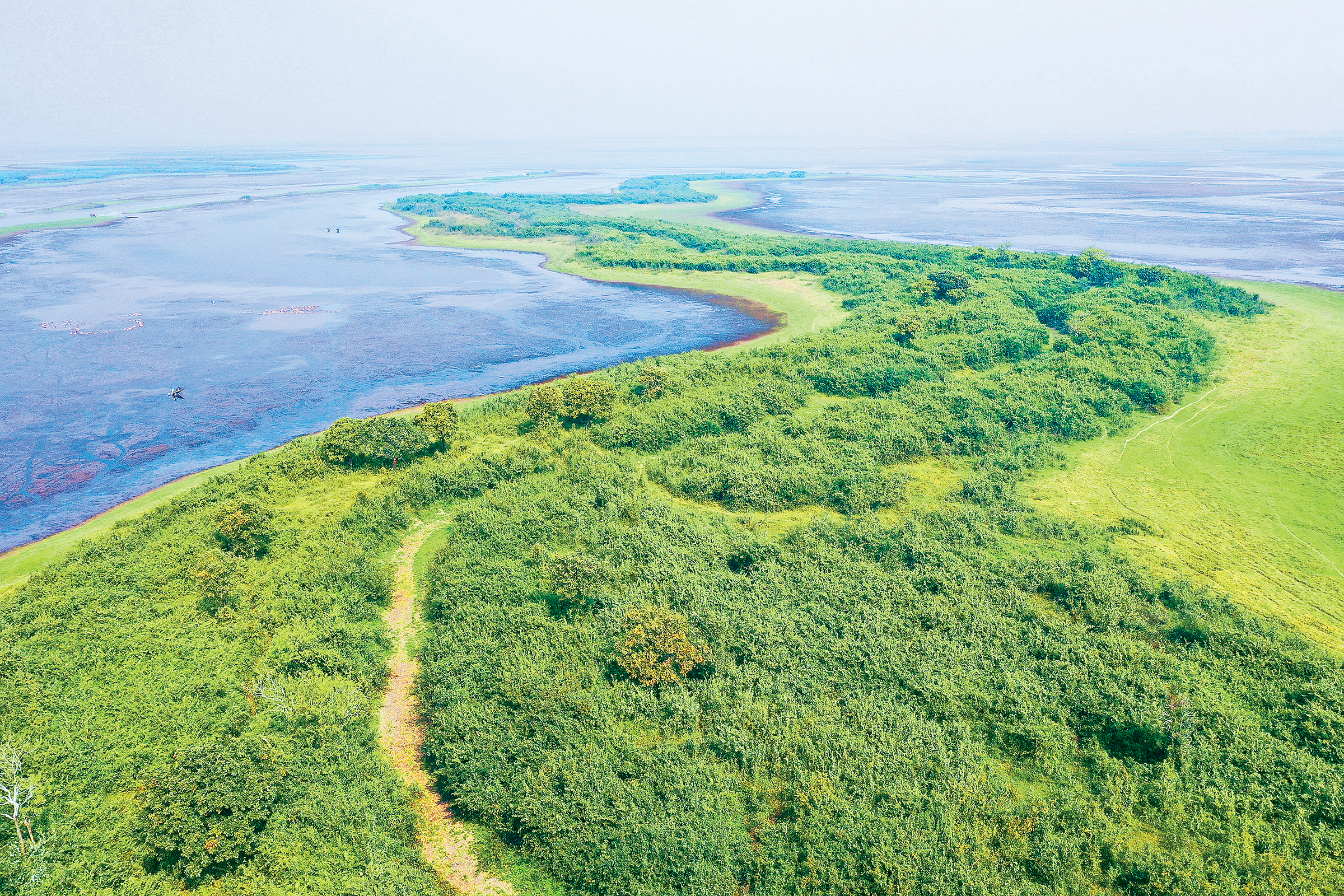
Bangladesh is finding that effective wildlife conservation requires integration with rural development, climate policy, and social justice. Squeezed onto a densely populated delta, the country holds key Bengal tiger habitats, important elephant corridors, and critical wetlands for migratory birds. Wildlife management here cannot rely solely on fences and patrols; it must be a negotiation between ecological and human survival.
Wildlife Heritage of Bangladesh
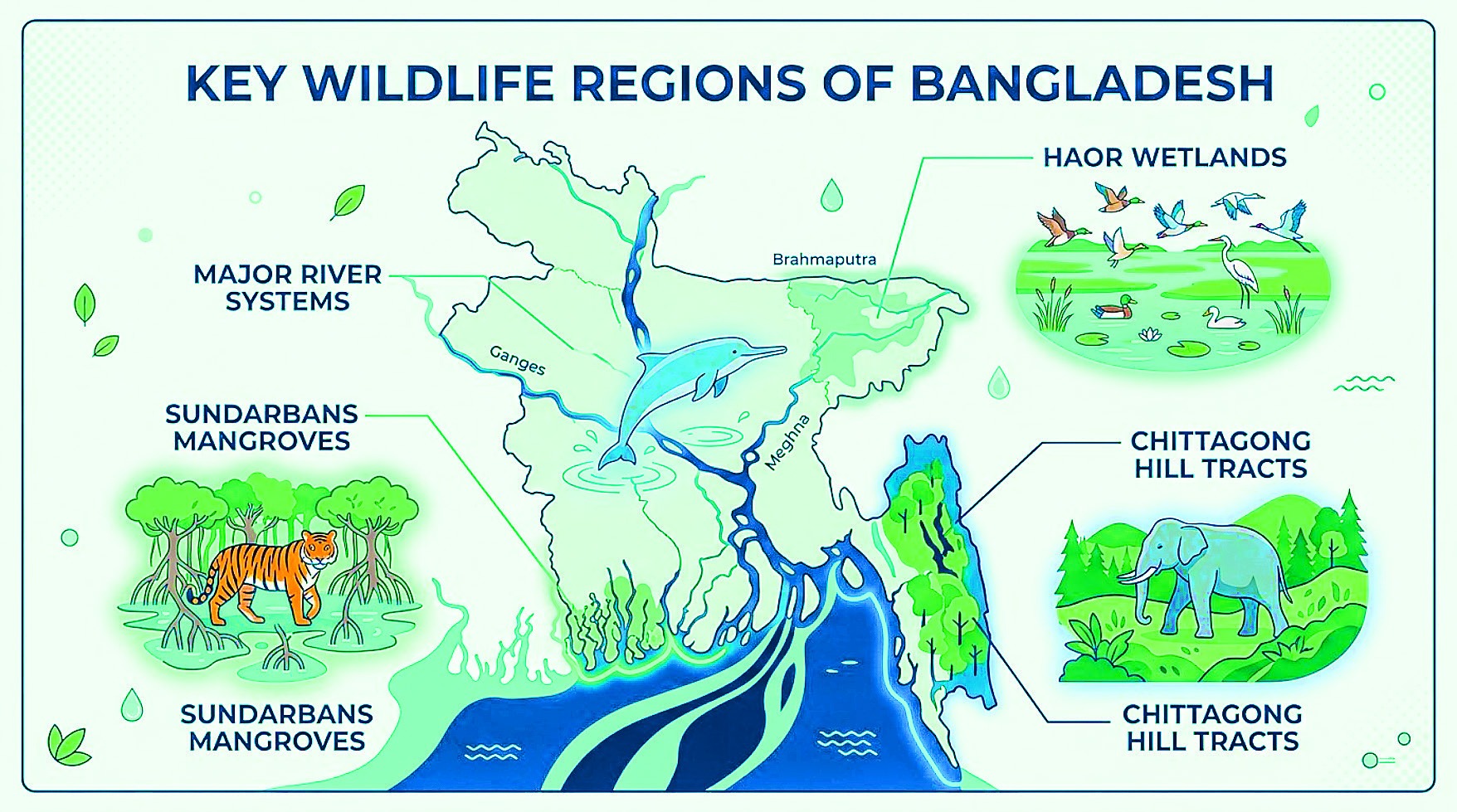
Bangladesh’s diverse habitats carry high ecological value relative to its small land area:
The Sundarbans: ~6,000 km² of mangroves holding the country’s last wild Bengal tigers, alongside spotted deer, wild boars, reptiles, and birds.
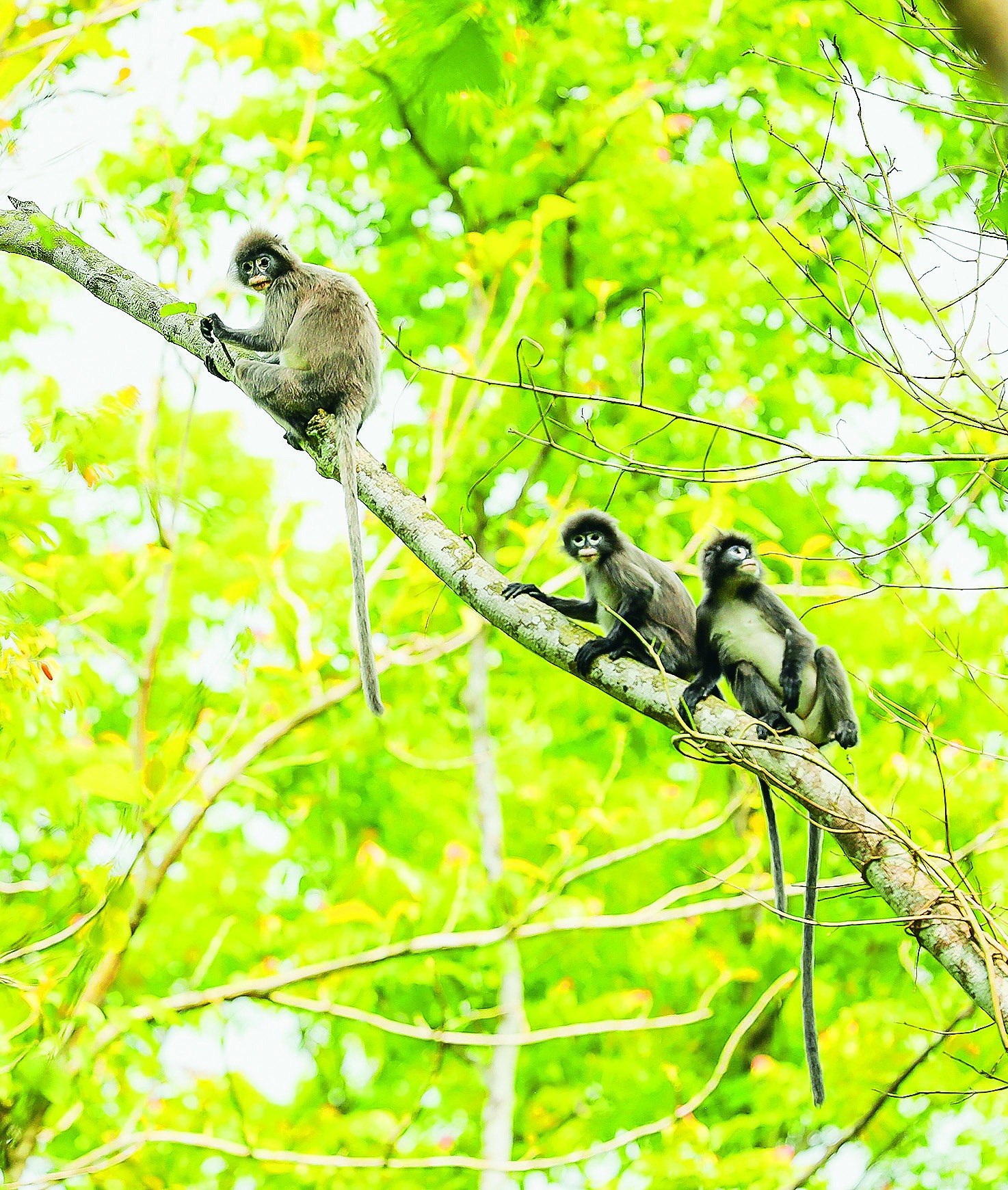
Chittagong Hill Tracts: Mountainous forests supporting remaining wild elephants, hoolock gibbons, and rich birdlife.
Haor Wetlands: Northeastern bowl-shaped basins that flood seasonally, serving alongside the Sundarbans as Ramsar sites of international importance for Asian flyway migratory birds.
Floodplains & Coastlines: Central sal forests protect small mammals and birds; braided river systems shelter Ganges River dolphins; and coastlines host nesting sea turtles and wintering shorebirds.
Because these habitats are narrow fragments bordered directly by high human population densities, wildlife cannot simply retreat from people. Conserving species requires protecting ecological connections across shared human–wildlife landscapes.
Diversity of Pressures
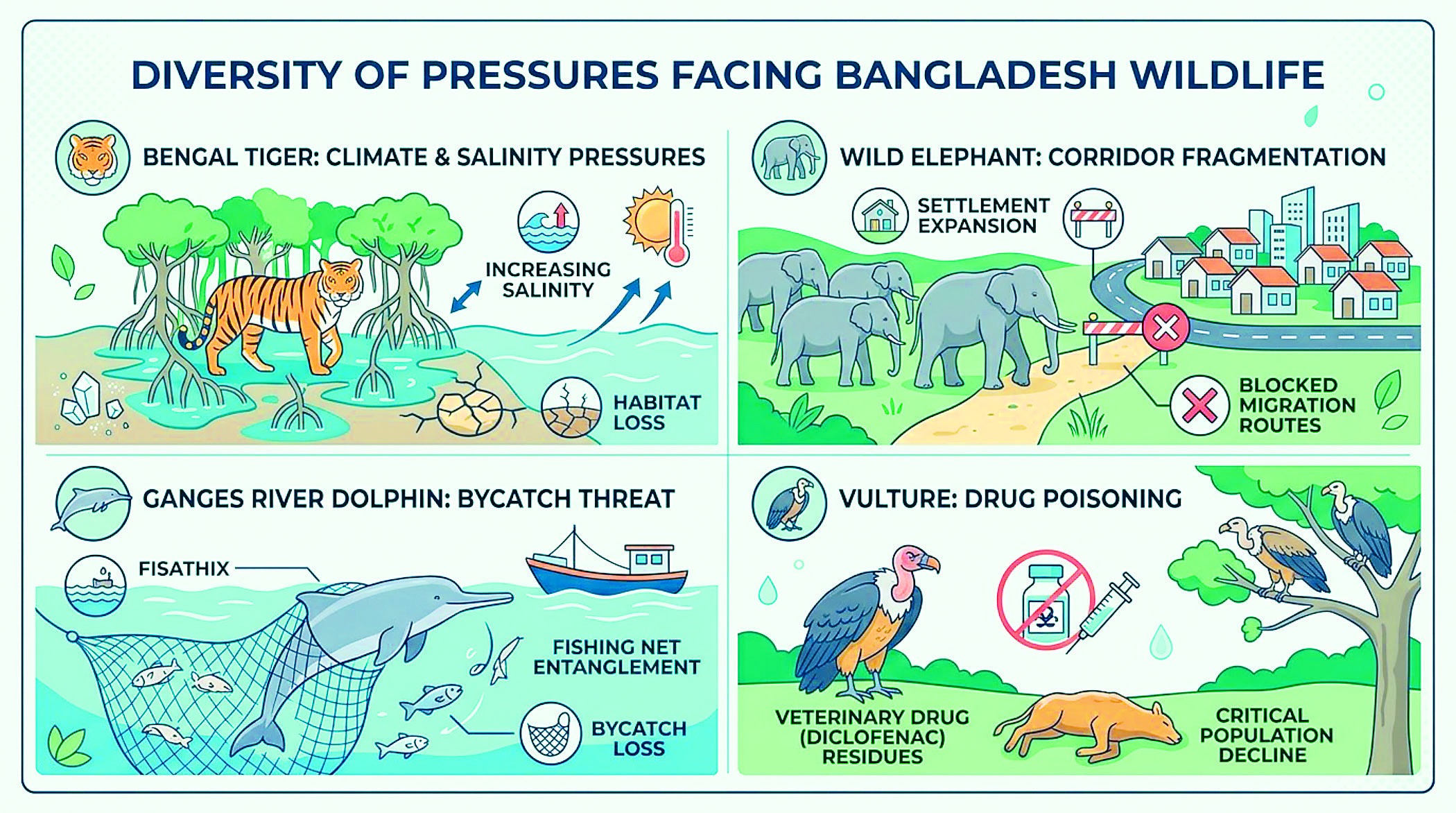
Pressures vary significantly by species, requiring distinct interventions:
Tigers: The 2024 camera-trap census estimated 125 tigers (up from 114 in 2018) due to stronger patrols and conflict-reduction measures, though salinity, reduced freshwater, and cyclones threaten the forest.
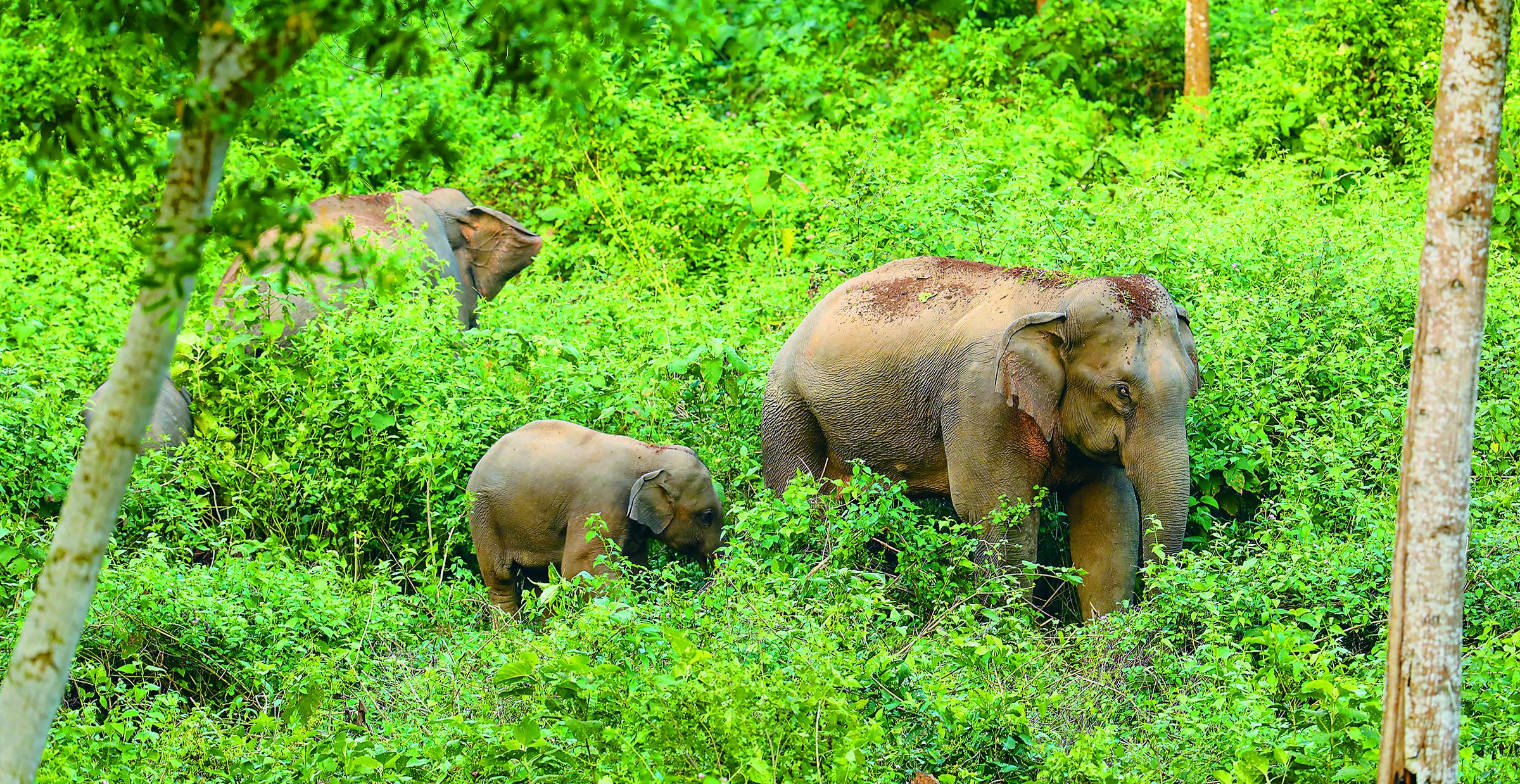
Elephants: Face severe habitat fragmentation and broken migration corridors in the southeast and northeast, increasing human-elephant conflict.
Dolphins & Turtles: Ganges River dolphins (shushuk) face fishing-net bycatch, reduced river flows, and rising salinity. Coastal developments impact sea turtles and migratory birds.
Vultures: Critically endangered despite bans on veterinary diclofenac and ketoprofen, facing ongoing risks like accidental bait poisoning.
Conservation as a Human Issue
Local communities rely on these landscapes for survival. Honey collectors and fishers enter tiger habitats for livelihoods, while farmers defend crops against destructive elephant incursions where insurance or prompt compensation is lacking. Treating local populations strictly as threats breeds noncompliance and retaliatory killings.
Coexistence carries real local costs. Community-based conservation addresses this by shifting benefits back to residents through compensation, ecotourism revenue, alternative livelihoods, and paid roles. For example, the IUCN/UNHCR Elephant Response Teams in Cox’s Bazar refugee camp zones successfully prevented human and elephant fatalities across hundreds of incursions.
Shifts in Management & Proven Approaches
Management is moving from strict protection—governed historically by the 1973 Wildlife Preservation Order and the 2012 Wildlife (Conservation and Security) Act—toward integrated landscape-level management. Key targeted tools include:
Elephant Response Teams: Over 130 local teams using early warnings and non-lethal deterrence.
Camera Trapping & Remote Sensing: Spatially explicit capture-recapture modeling enables data-driven population tracking.
Habitat & Prey Restoration: Recovery of prey species like spotted deer and wild boar underpins tiger population growth.
Targeted Chemical Bans: Regulating specific toxins like diclofenac, backed by designated vulture safe zones.
Governance and Future Vision
Bangladesh is bound by international conventions (CITES, CBD, Ramsar, CMS) and supported by species-specific plans (e.g., Bengal Tiger Action Plan 2018–2027, Vulture Action Plan, Elephant Action Plan). The Forest Department leads execution alongside NGOs (IUCN, WCS), universities, and global donors.
However, enforcement gaps persist. Wildlife crime forensic capacity remains limited, prosecutions are rare, and major infrastructure projects (such as the Rampal power plant) have proceeded despite ecological concerns.
Over the next 10–20 years, Bangladesh cannot realistically expand major wilderness areas. Success depends on precision: securing remaining elephant corridors, sustaining prey recovery, expanding dolphin bycatch-reduction gear, and permanently funding community response models. Wildlife survival ultimately hinges on building strong, cooperative relationships with the millions of people sharing the delta's edges.