
The Sustainability Trade-off
Choosing a new set of suppliers highlights a common corporate dilemma. While one vendor maintains strong labor and environmental standards inside factories, its prices are high. Conversely, another vendor offers cheaper goods but faces criticism for questionable labor practices. For executive teams, balancing short-term margins against long-term risks creates constant tension. Although companies may aspire to be sustainable, cost considerations remain vital. Consequently, visible sustainability commitments often fail to reach everyday decision-making. Closing this gap requires structural oversight—a responsibility belonging directly in the boardroom.
From CSR to Strategy
Historically, corporate sustainability was limited to social/environmental responsibility via basic CSR initiatives or charitable campaigns unrelated to core business strategy. Today, it has broadened into an ESG framework where labor practices, environmental standards, and energy efficiency directly affect supply chains, export markets, and operational costs. Rather than merely offering societal value, modern sustainability focuses on creating long-term value while protecting people and resources. For developing economies like Bangladesh preparing for LDC graduation, meeting growing ESG standards is essential for maintaining international competitiveness and complying with global regulations like the EU's Carbon Border Adjustment Mechanism (CBAM).
The Silo Trap: Why Departments Can't Act Alone
Sustainability responsibilities are typically split among departments—HR handles labor welfare, Operations targets efficiency, and Legal monitors compliance. When siloed, sustainability remains fragmented, leaving systemic risks hidden from the board.
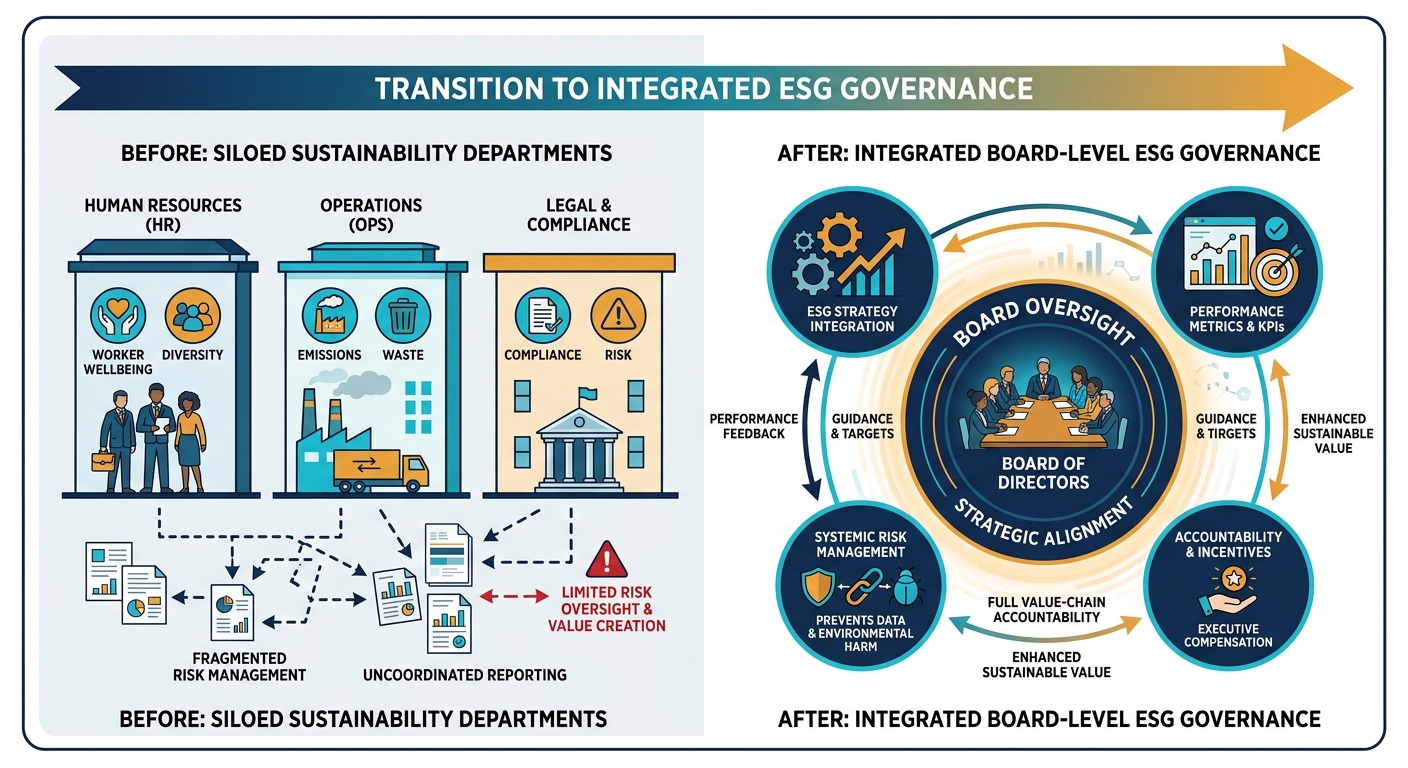
A dedicated Sustainability function can unify these perspectives and present management with an integrated view. However, decisions with long-term strategic implications require board-level oversight. The board is uniquely positioned to evaluate these options and ensure alignment with company strategy. Simply put: when sustainability teams identify a material strategic problem, it must be escalated directly to the board.
What Belongs in the Boardroom
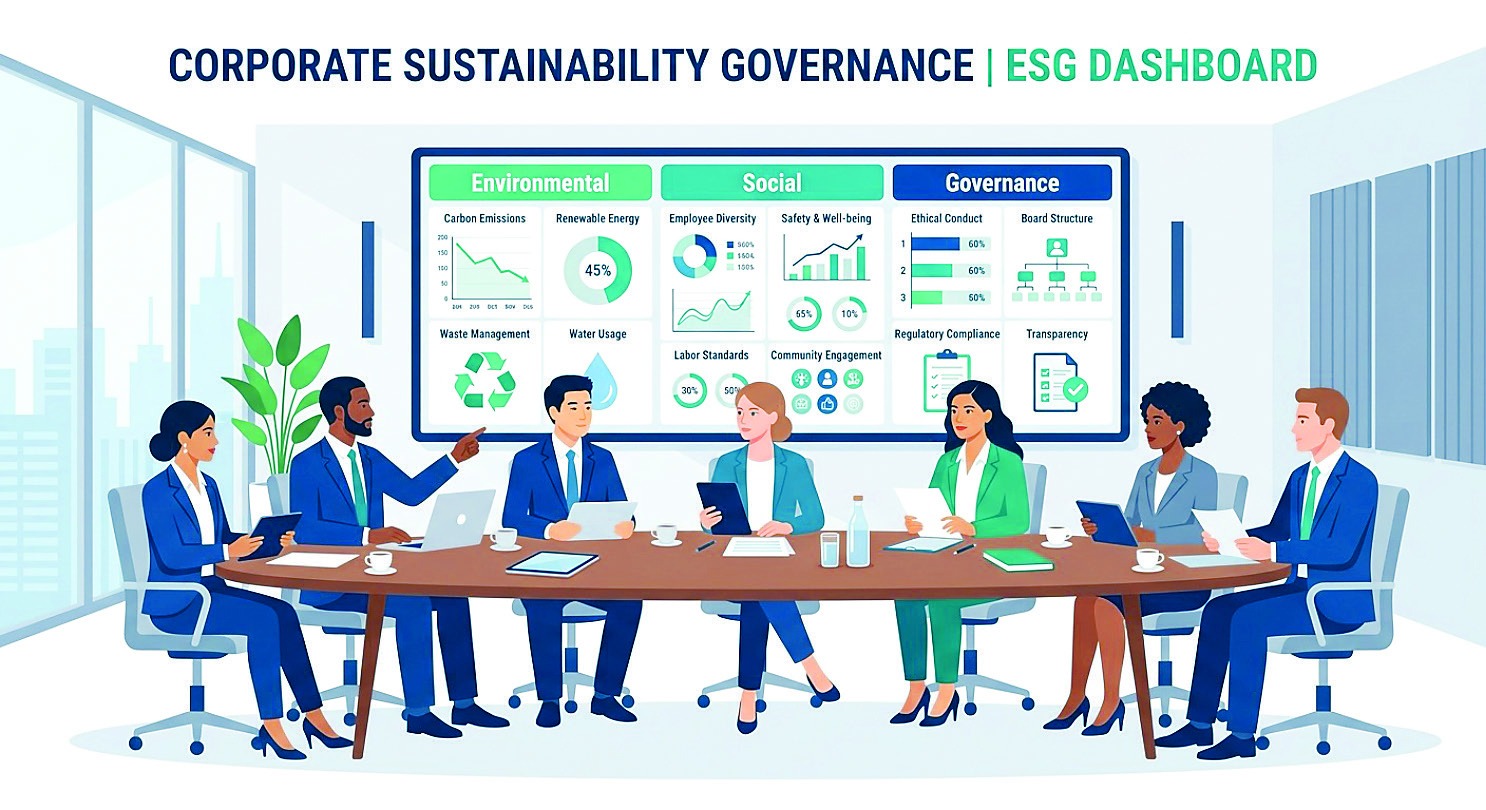
Boards must engage directly in the strategic implications of sustainability rather than observing from afar or viewing it solely through a compliance lens. Effective governance requires evaluating material sustainability risks and opportunities alongside core business priorities, weighing both short- and long-term costs and strategic exposures.
In the Bangladeshi RMG sector, for example, investing in LEED green factories carries high upfront costs but yields long-term energy efficiency, ensures compliance with strict buyer standards, and secures exclusive orders. Board members must understand these strategic trade-offs before granting approval. Ultimately, embedding sustainability into strategic decision-making elevates it from a departmental task to a core governance duty. With local regulators like BSEC and Bangladesh Bank continually strengthening governance and sustainable finance standards, corporate directors must move past "box-ticking" and treat ESG as a central board responsibility.
Beyond the Sustainability Department
Having ESG functions or reporting mechanisms does not guarantee that sustainability is embedded in corporate governance. Operating in isolation from finance, procurement, and risk, sustainability often remains confined to reports that rarely influence actual decisions. For example, an automaker targeting emission reductions will fail unless those targets shape its investment, procurement, and operations. The key is integrating sustainability into the core channels that govern risk, production, and performance—ensuring it informs decisions across all departments.
Integrating sustainability into governance allows companies to resolve vulnerabilities before they turn into operational or regulatory crises. Instead of taking a costly "wait-and-see" approach—like a Bangladeshi cement manufacturer forced into a rushed, expensive transition when new environmental rules take effect—proactive governance enables gradual adoption and helps identify market opportunities. Evaluating these factors alongside strategic planning builds long-term resilience and competitiveness rather than simple regulatory compliance.
Who is Accountable?
True governance requires clear accountability for sustainability goals to prevent confusion and inaction. The solution is connecting targets directly to KPIs and actual budgets—for example, pairing an operational energy-reduction target with dedicated financial resources. Top management can then monitor progress and enforce accountability. Without clear ownership and metrics, ESG targets remain mere PR statements.
Assigning responsibilities alone is insufficient; sustainability must also tie to performance assessments. If cost reduction remains a manager's sole KPI, sustainability will be sidelined whenever commercial pressures arise. Therefore, function-specific sustainability KPIs should be integrated into executive and departmental performance evaluations. Board and executive leadership must align these incentives so that departmental reviews and compensation collectively advance the company's sustainability strategy.
When Sustainability becomes the Job
A company’s best policies and reporting structures have limited impact if sustainability does not influence day-to-day operations. When treated as a standalone departmental duty, other teams naturally overlook its consequences. However, when finance managers balance environmental liabilities against profitability or marketing teams weigh green claims against reputational risks, sustainability becomes integrated into standard decision-making. Leadership must demonstrate that sustainability matters in commercial choices so it naturally becomes part of daily work.
The core issue is not creating a dedicated sustainability department, but integrating sustainability into business governance. A governance gap occurs when sustainability commitments exist separately from daily decisions, risk oversight, and investments. Closing this gap does not mean sacrificing profit for ethics; it means identifying where sustainability drives profitability, resilience, and long-term competitiveness. When sustainability reaches the boardroom, material risks receive proper strategic attention, turning compliance burdens into drivers of resilience.