
In the bustling urban hubs of Bangladesh, thousands of vulnerable children walk a precarious line every single day. Armed with worn-out sacks, they navigate garbage dumps and bustling streets to gather discarded paper and plastic. For these collectors and pickers, waste collection is not an environmental choice; it is a matter of immediate survival.
Yet, within these mountains of urban refuse lies an untapped opportunity for ecological restoration, economic empowerment, and social justice.
Enter the Sustainable Environment Development Project (SEDP), a pioneering flagship initiative spearheaded by TMSS. Operating across 28 districts in four divisions—Rangpur, Rajshahi, Dhaka, and Khulna—TMSS is turning local environmental pollution into a catalyst for community resilience.
A Dual Mission: Healing the Planet, Uplifting the Vulnerable
At its core, the SEDP framework fuses two vital objectives: environmental remediation and poverty alleviation.
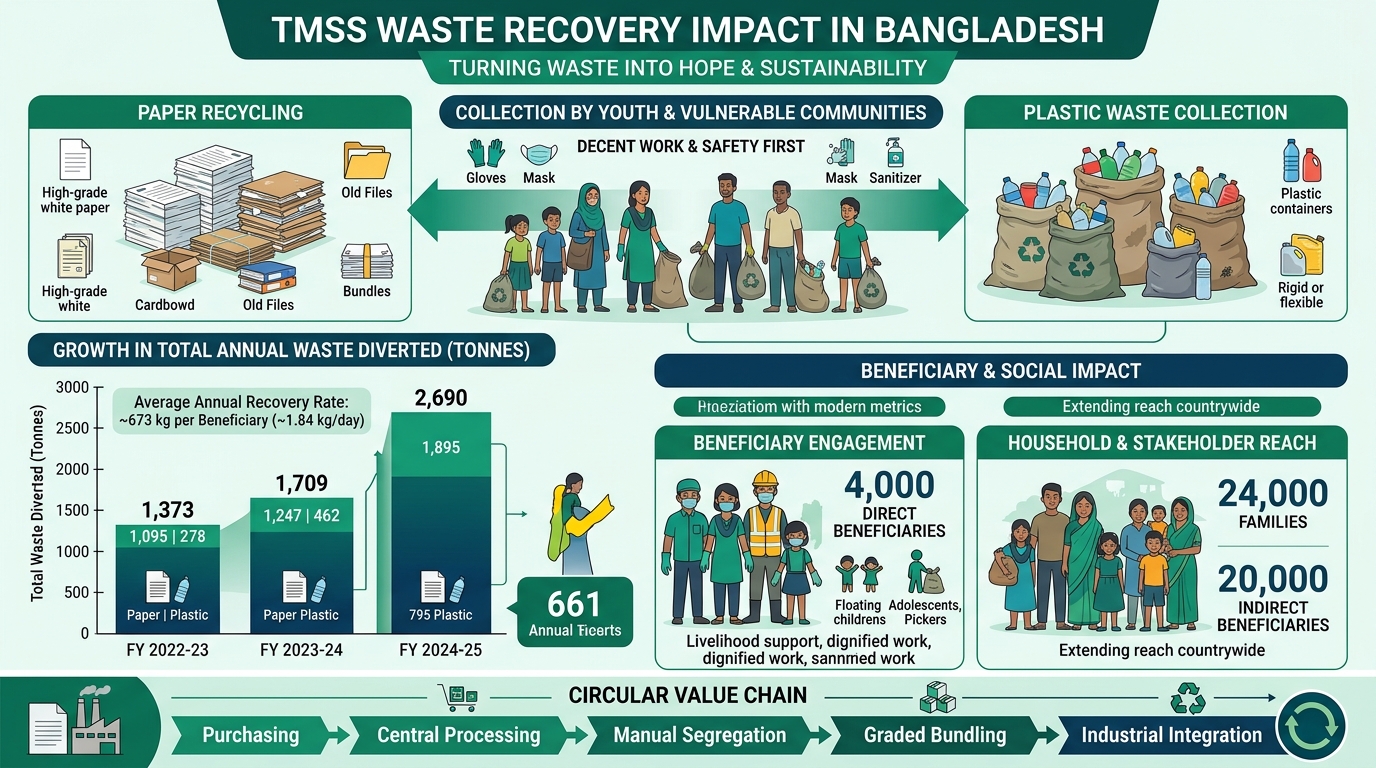
The program targets floating children, adolescents, and street-level waste pickers, providing them with structured livelihood support, dignified working conditions, and essential safety nets. Rather than leaving these vulnerable communities to operate in informal, hazardous environments, TMSS intervenes directly at the community level:
Decent Work & Safety First: Distributing crucial personal protective equipment—including masks, hand sanitizers, and heavy-duty gloves—to minimize health risks during collection.
Holistic Social Upliftment: Conducting regular awareness sessions focused on personal hygiene, formal education access, personal health, and fundamental child rights.
Direct Financial Integration: Delivering direct financial assistance to collectors and their families, paving a sustainable path out of extreme poverty.
The Numbers Speak: Exponential Impact in Waste Recovery
Through strategic aggregation and sorting, SEDP’s operational footprint has expanded dramatically over the past three financial years. By organizing collection operations, TMSS has successfully diverted thousands of tonnes of recyclable materials away from municipal dumps and back into the circular economy.
During the FY 2024–25 period alone, SEDP recovered 2,690 tonnes of high-grade paper and plastic. When mapped across the project’s 4,000 direct beneficiaries, this translates to an average annual recovery rate of approximately 673 kg of waste per beneficiary (~1.84 kg per day)—a remarkable milestone in grassroots environmental stewardship.
Beyond the direct collectors, the program indirectly impacts over 20,000 family members and community stakeholders, extending its reach to 24,000 families across the country.
Inside the Circular Value Chain: From Bulk Sacks to Market-Grade Raw Materials
TMSS does not merely facilitate waste collection—it actively builds and drives the regional circular economy chain.
Purchasing at Source: TMSS secures raw collected materials in bulk quantities (often 100+ sacks at a time) directly from pickers and garbage collectors by weight at fair market rates.
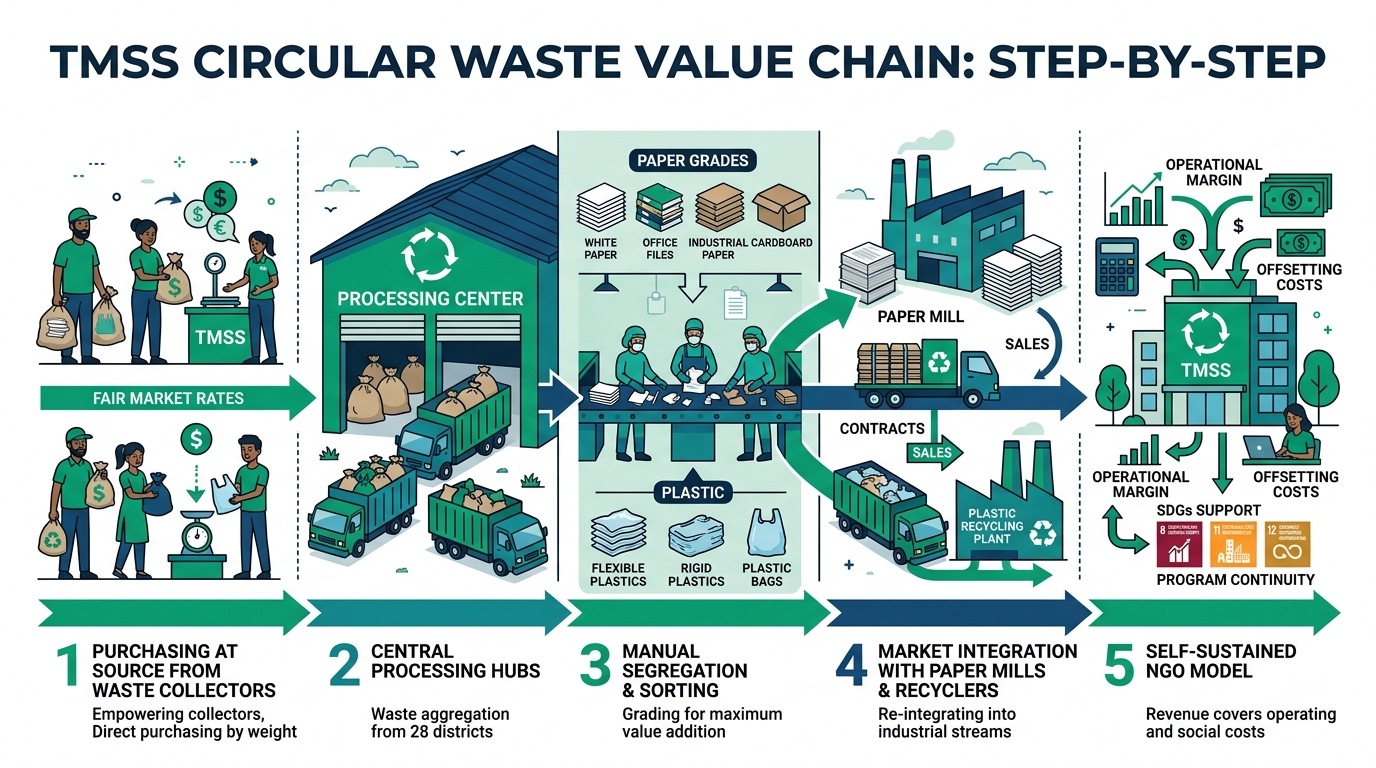
Central Processing & Aggregation: Collected materials are moved to designated TMSS processing hubs.
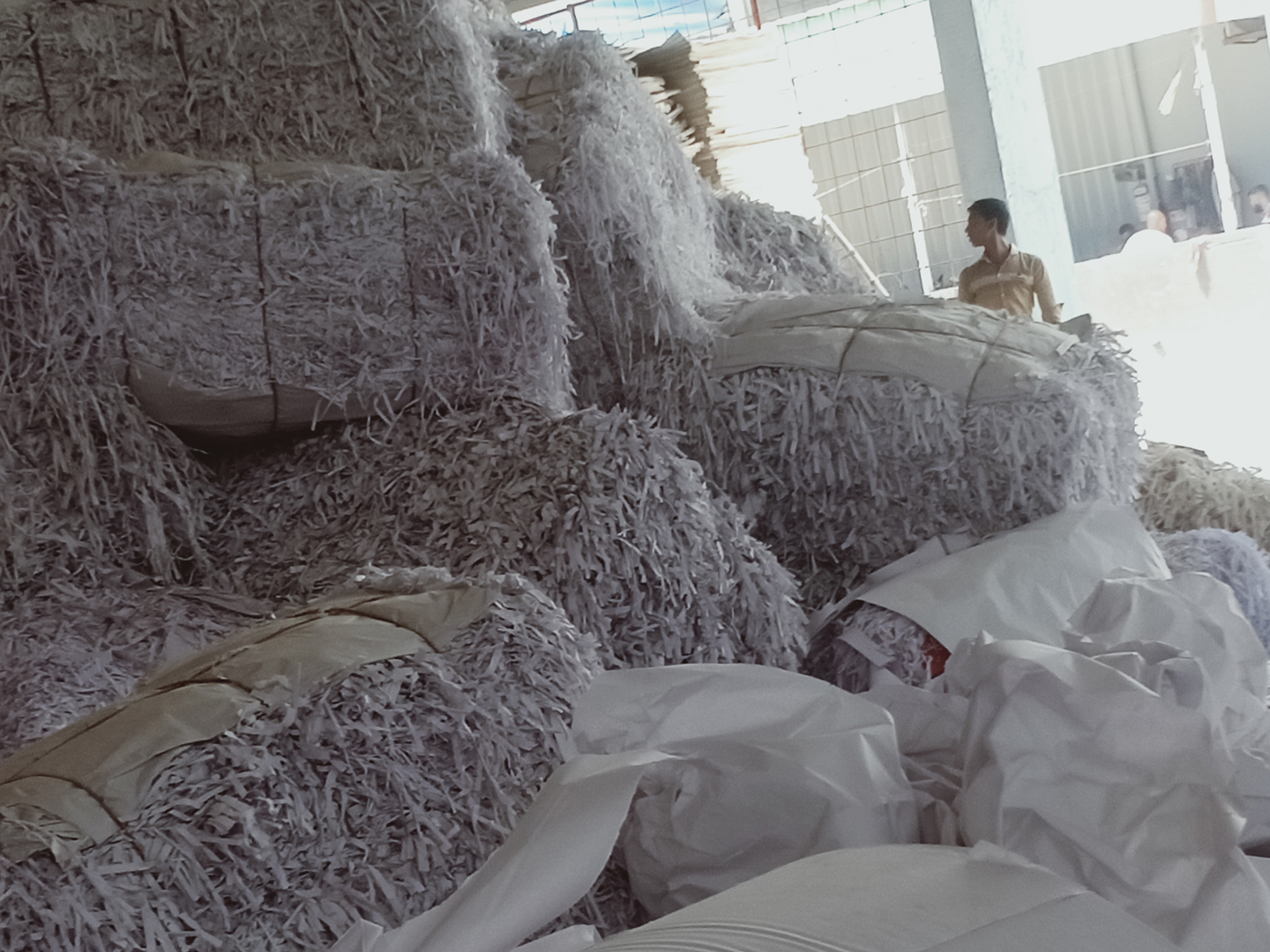
Manual Segregation & Value Addition: Daily-wage workers systematically sort mixed paper waste into distinct commercial grades—such as high-grade white paper, office files, folders, and heavy industrial paper. Materials are then compressed, bundled, and grouped.
Market Integration: TMSS negotiates contracts with verified industrial paper mills, recycling businesses, and regional traders, reintroducing processed waste into the manufacturing lifecycle at prevailing market prices.
Institutional Ownership: Built for Long-Term Self-Sustainability
A central challenge facing NGO-driven social programs is long-term operational continuity once donor funds dry up. SEDP stands apart as a fully self-sustained institutional initiative owned entirely by TMSS.
By retaining an operational margin on the sale of segregated, high-grade recyclables, TMSS generates steady revenue that helps offset its operating and processing costs. This internal financial engine—combined with TMSS's institutional commitment—ensures that SEDP will continue expanding across Bangladesh, proving that environmental protection and social welfare can thrive side by side.
Carrying it Forward
This business model is self-sustained, scalable, and replicable. Now, with the Extended Producer Responsibility Guideline for Plastic Waste Management, 2026, in place, more business houses can adapt this model to clean up plastics and other solid wastes, including paper and textile materials, and start new possibilities of livelihood generation and a cleaner Bangladesh.